Reading time:3 min read
Understanding Forgery: A Crime with Serious Legal Consequences
CSVC
September 14, 2025Introduction
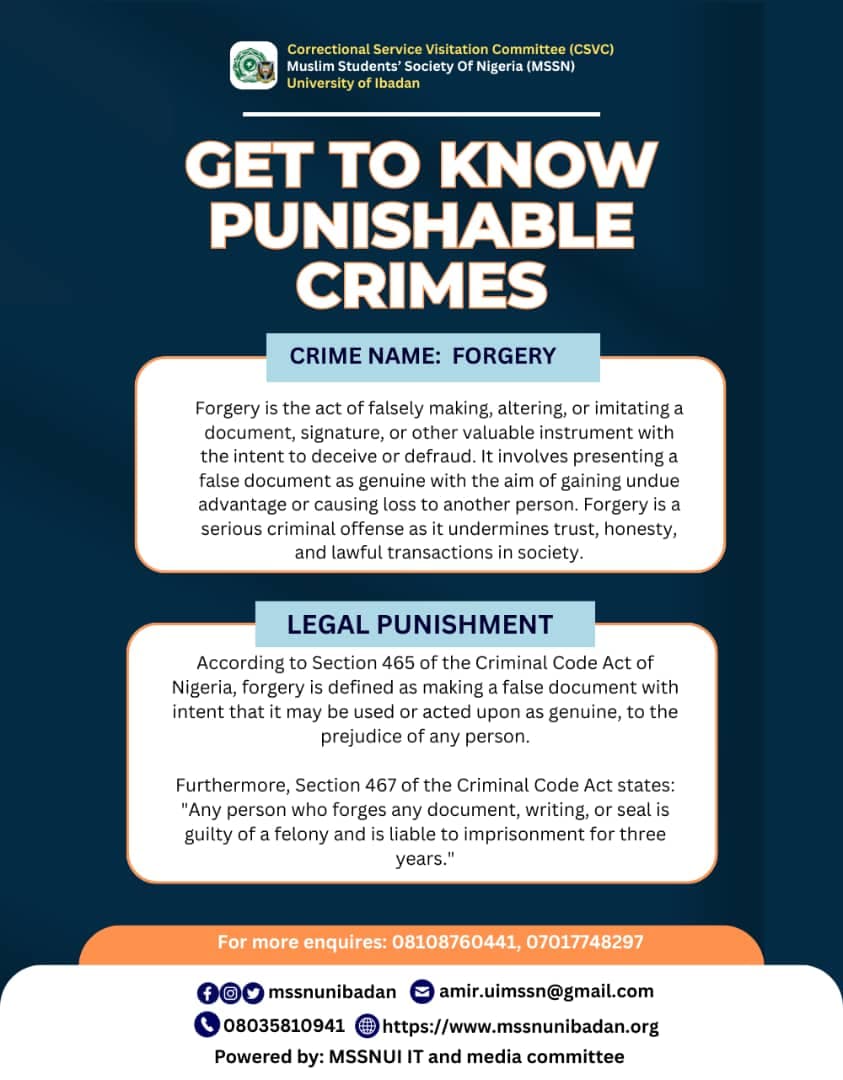
Forgery is the act of falsely making, altering, or imitating a document, signature, or other valuable instrument with the intent to deceive or defraud. It involves presenting a false document as genuine with the aim of gaining undue advantage or causing loss to another person. Forgery is a serious criminal offense as it undermines trust, honesty, and lawful transactions in society.
Examples:
1. Falsifying documents – Altering certificates, academic transcripts, identity cards, or official records to present them as authentic.
2. Signature forgery – Signing another person’s name on cheques, contracts, or legal documents without their consent.
3. Counterfeit financial instruments – Creating fake banknotes, cheques, or promissory notes with the intent to deceive financial institutions or individuals.
4. Corporate or business forgery – Fabricating invoices, receipts, or company seals for fraudulent gain.
5. Digital forgery – Manipulating electronic documents, emails, or digital signatures to mislead or defraud.
Legal Consequence
The Nigerian legal system expressly criminalizes forgery.
According to Section 465 of the Criminal Code Act of Nigeria, forgery is defined as making a false document with intent that it may be used or acted upon as genuine, to the prejudice of any person.
Furthermore, Section 467 of the Criminal Code Act states:
"Any person who forges any document, writing, or seal is guilty of a felony and is liable to imprisonment for three years."
In more serious cases, such as forgery related to public documents or government seals, the punishment may extend to 14 years imprisonment.
Conclusion
Forgery is a criminal act that carries grave consequences under Nigerian law. Whether it involves falsifying personal, financial, or official documents, the act threatens the integrity of trust and accountability in society. Everyone must be cautious not to engage in or support acts of forgery, as the law is clear and the penalties severe.
Remember, honesty and integrity are the foundations of a trustworthy society. Always ensure that your documents and representations remain authentic and truthful.
Reference
Longman Dictionary of Contemporary English. Pearson Education Limited.
Criminal Code Act of Nigeria, Sections 465–467.
This is a publication of the Correctional Service Visitation Committee (CSVC) of the Muslim Students' Society of Nigeria, University of Ibadan (MSSNUI).