
Reading time:2 min read
Understanding Misinformation: A Threat to Truth and Society
CSVC
April 27, 2025Introduction
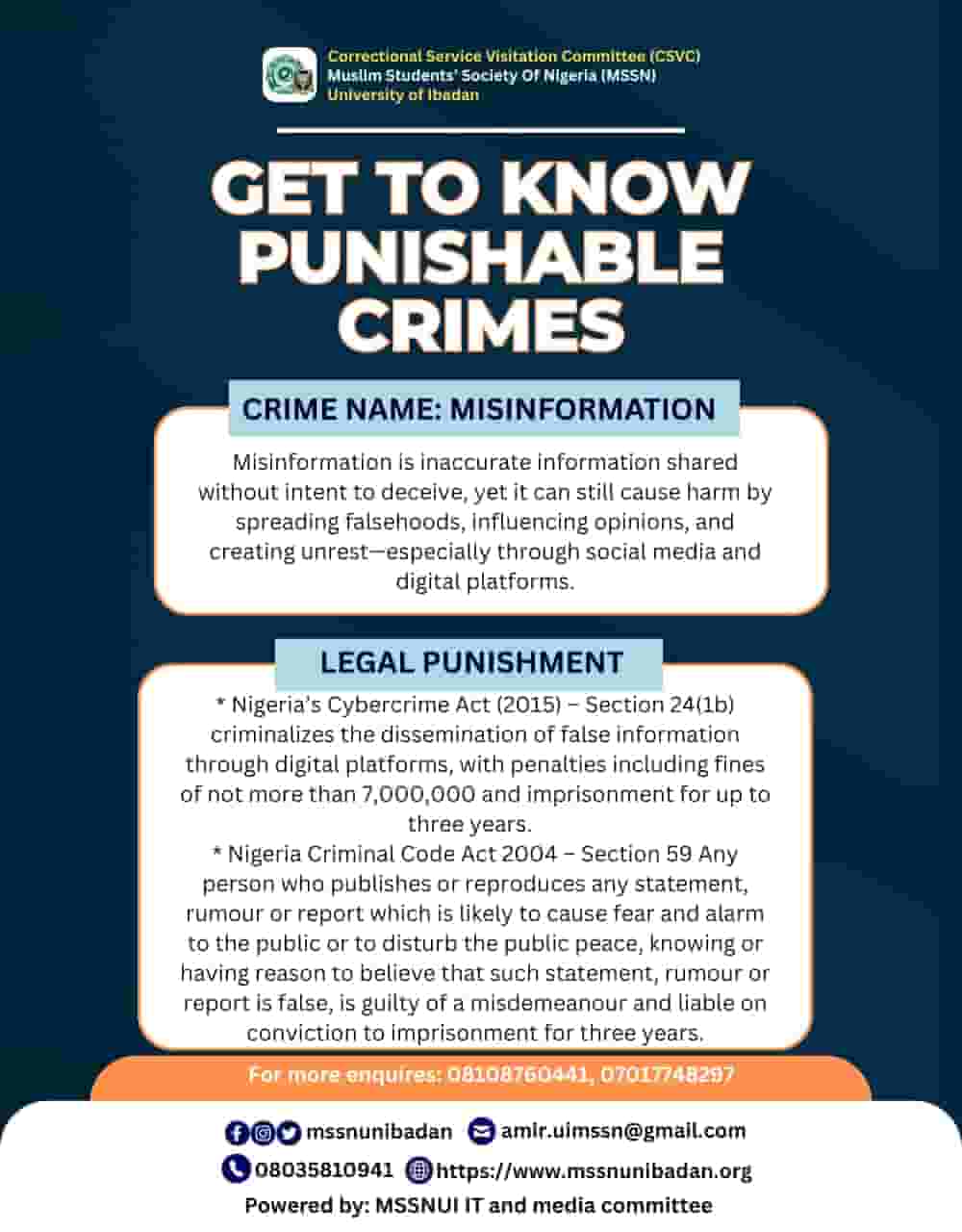
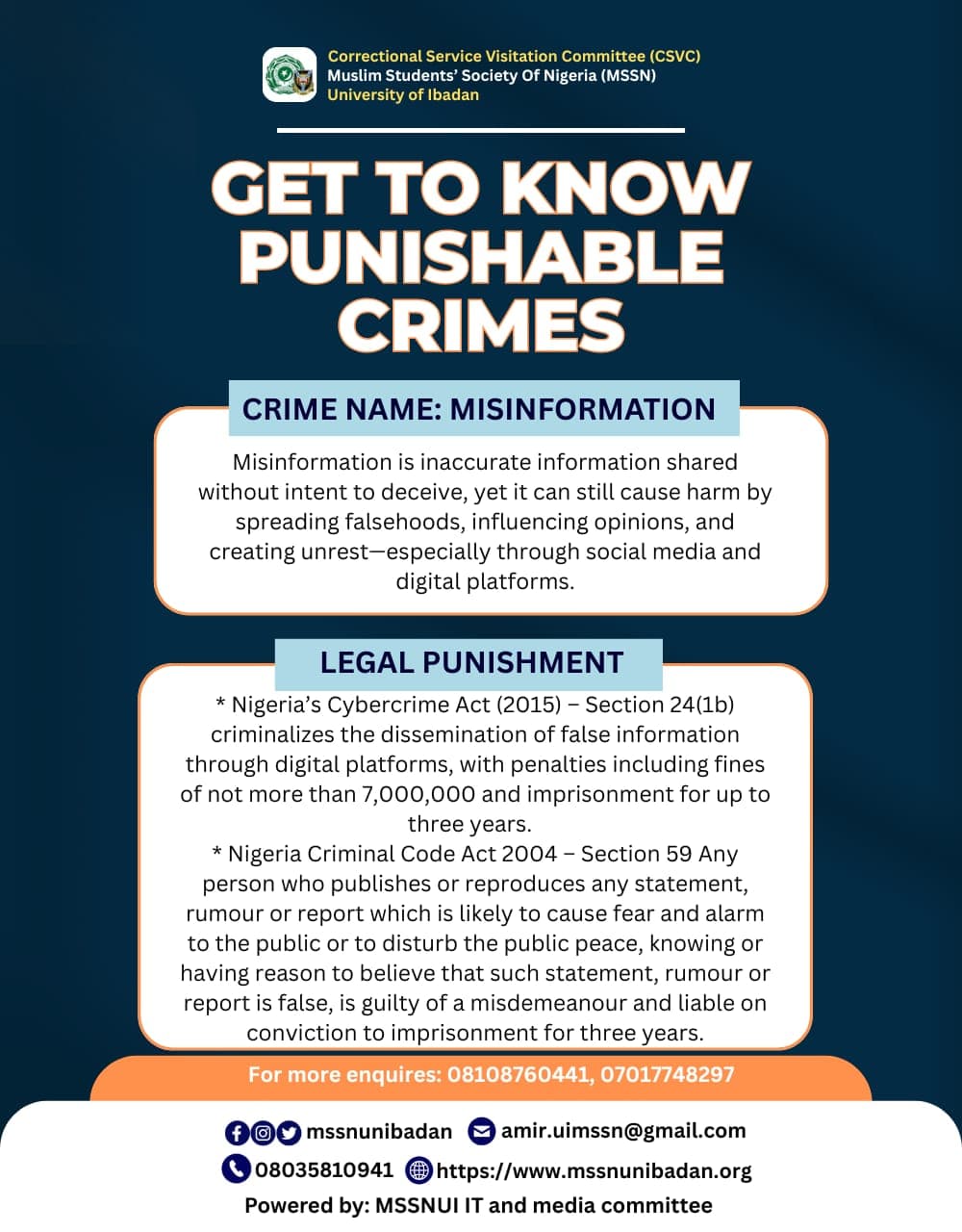
Misinformation is false or inaccurate information that is spread, regardless of intent to deceive. Unlike disinformation (which is deliberately misleading), misinformation can be shared unknowingly, yet it still causes harm by distorting facts, influencing opinions, and even inciting violence. In today’s digital age, misinformation spreads rapidly through social media, word of mouth, and manipulated content, making it a serious societal concern.
Examples:
1. False Health Claims – Sharing unverified cures or dangers about diseases (e.g., "Vaccines cause autism" or "Drinking bleach cures COVID-19").
2. Fabricated News Stories – Creating or spreading fake news to manipulate public opinion (e.g., "Celebrity X has died" or "Politician Y committed a crime").
3. Altered Media – Using edited images, deepfake videos, or out-of-context quotes to mislead people (e.g., doctored photos of protests to incite violence).
Legal Consequences
Many countries, including Nigeria, have laws against spreading false information, especially when it incites panic, hatred, or violence.
In Nigeria, several legal provisions address the spread of false information, including the following:
- Nigeria’s Cybercrime Act (2015): Section 24 (1b) criminalizes the dissemination of false information through digital platforms, with penalties including fines of not more than 7,000,000 and imprisonment for up to three years.
- Penal Code (Northern States) & Criminal Code (Southern States): False statements leading to public alarm can result in legal action.
Conclusion
Misinformation erodes trust, fuels conflict, and endangers lives. Whether shared intentionally or not, false information can have severe real-world consequences. Responsible sharing, fact-checking, and media literacy are essential to combat its spread.
Remember: Always verify information before sharing, and rely on credible sources to prevent the harm caused by misinformation.
Reference:
- Longman Dictionary of Contemporary English. Pearson Education Limited.
- Nigeria’s Cybercrime Act (2015)
This is a publication of the Correctional Service Visitation Committee (CSVC) of the Muslim Students' Society of Nigeria, University of Ibadan (MSSNUI).