
Reading time:2 min read
Understanding Theft: A Crime with Serious Consequence
CSVC
June 12, 2025Introduction
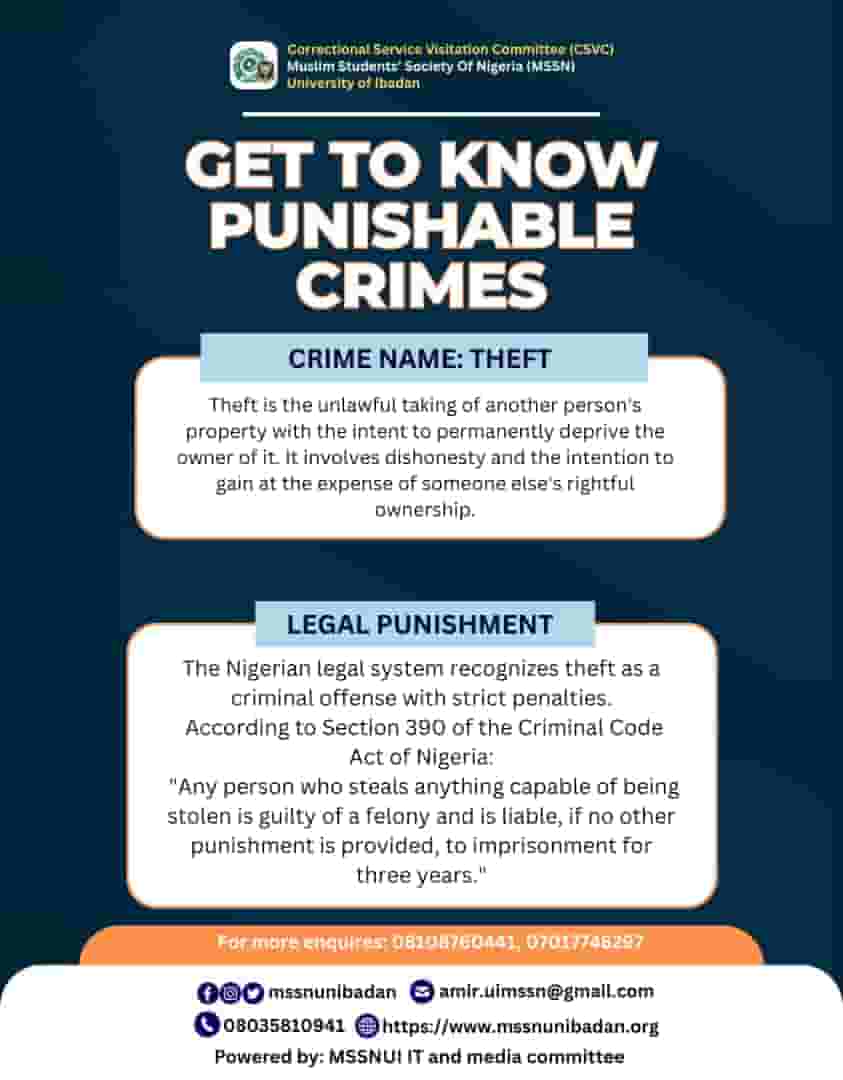
Theft is the unlawful taking of another person's property with the intent to permanently deprive the owner of it. It involves dishonesty and the intention to gain at the expense of someone else's rightful ownership.
Examples:
1. Stealing physical items – Taking someone’s belongings without permission, such as money, electronics, vehicles, or personal items.
2. Shoplifting or burglary – Illegally entering a property or store to take goods or valuables without paying for them.
3. Theft by deception – Using lies or fraudulent means to obtain someone else's property, including identity theft, online scams, or impersonation.
Legal Consequences
The Nigerian legal system recognizes theft as a criminal offense with strict penalties.
According to Section 390 of the Criminal Code Act of Nigeria: "Any person who steals anything capable of being stolen is guilty of a felony and is liable, if no other punishment is provided, to imprisonment for three years."
Conclusion
Theft is a serious crime under Nigerian law and carries heavy penalties, regardless of the value of the stolen item.
Respecting the property of others and choosing honesty over deceit helps build a trustworthy and safe society.
Remember, integrity and hard work are always better than taking what isn’t yours.
References
Longman Dictionary of Contemporary English. Pearson Education Limited.
Criminal Code Act of Nigeria
This is a publication of the Correctional Service Visitation Committee (CSVC) of the Muslim Students' Society of Nigeria, University of Ibadan (MSSNUI).