Reading time:2 min read
Understanding Plagiarism: A Crime with Serious Consequences
CSVC
May 18, 2025Introduction
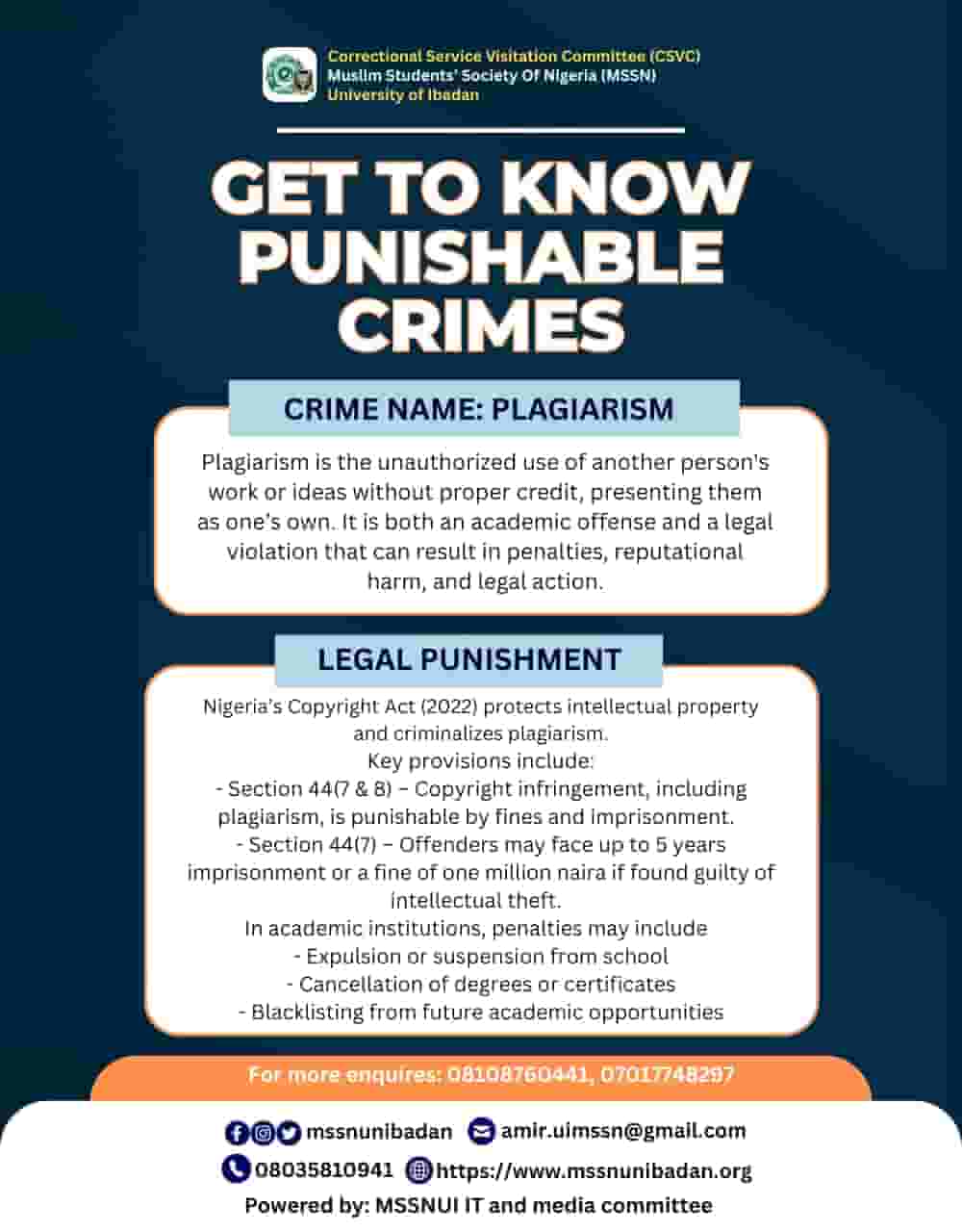
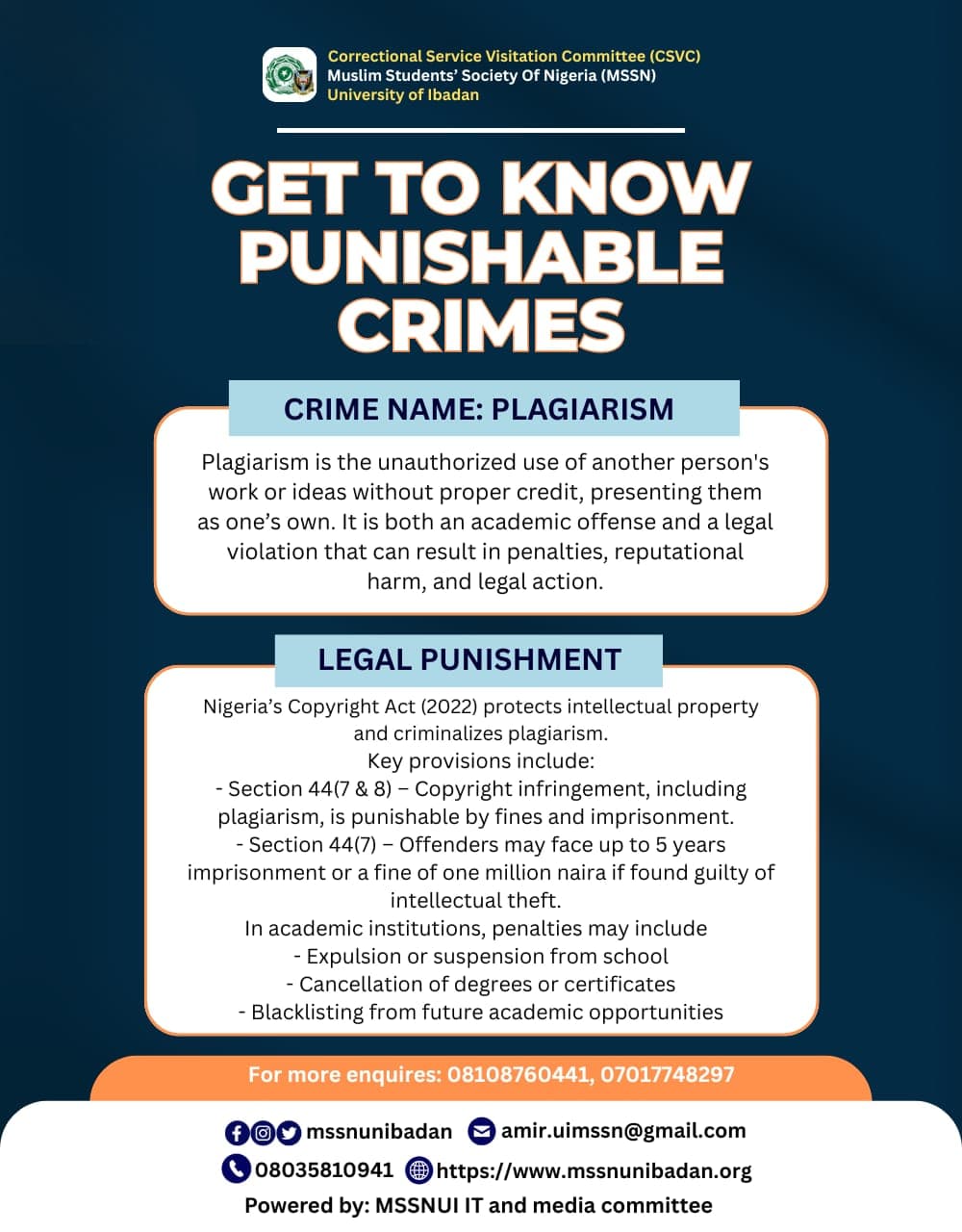
Plagiarism is the act of using someone else’s work, ideas, or intellectual property without proper acknowledgment and presenting it as one’s own. It is considered both an academic offence and a punishable crime under intellectual property laws in many countries including Nigeria. Plagiarism violates ethical standards and can lead to legal consequences, reputational damage, and academic penalties.
Examples
1. Copying and pasting text without citation: Using sentences, paragraphs, or excerpts from articles, books, websites, or other sources without appropriate references.
2. Paraphrasing without credit: Rewriting someone else’s ideas in your own words but failing to cite the original source.
3. Submitting another person’s work as your own: Turning in an essay, project, or research paper written by someone else (e.g., buying essays online or using a friend’s work).
4. Self-plagiarism: Reusing your own previously submitted work without permission or proper citation.
Legal Consequences
- Nigeria’s Copyright Act (2022) protects intellectual property and criminalizes unauthorized use of copyrighted works. Under Section 44 (7 and 8), offenders who use or distribute protected works without consent, especially for commercial purposes, face a minimum fine of ₦1,000,000, at least five years’ imprisonment, or both.
- In academic institutions, penalties may include: expulsion or suspension from school, cancellation of degrees or certificates, and blacklisting from future academic opportunities.
Conclusion
Plagiarism is a serious offense with legal, academic, and professional consequences. Students and professionals must uphold integrity by properly citing sources and creating original work. Understanding the ethical and legal implications of plagiarism helps foster a culture of honesty and respect for intellectual property.
Remember, always credit your sources and use plagiarism-checking tools to ensure originality.
References
- Copyright Act of Nigeria (2022)
- Longman Dictionary of Contemporary English
This is a publication of the Correctional Service Visitation Committee (CSVC) of the Muslim Students' Society of Nigeria, University of Ibadan (MSSNUI).