
Reading time:3 min read
Understanding Drug Abuse: A Crime with Serious Consequences
CSVC
November 01, 2025Introduction
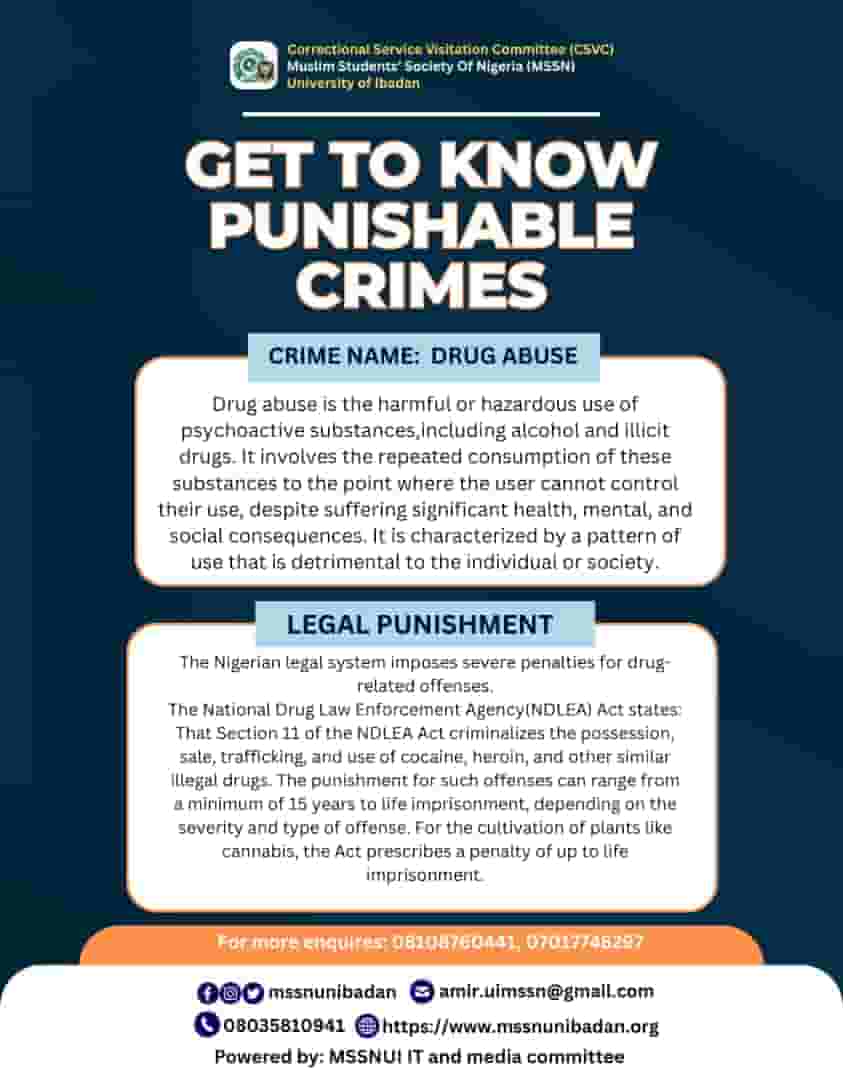
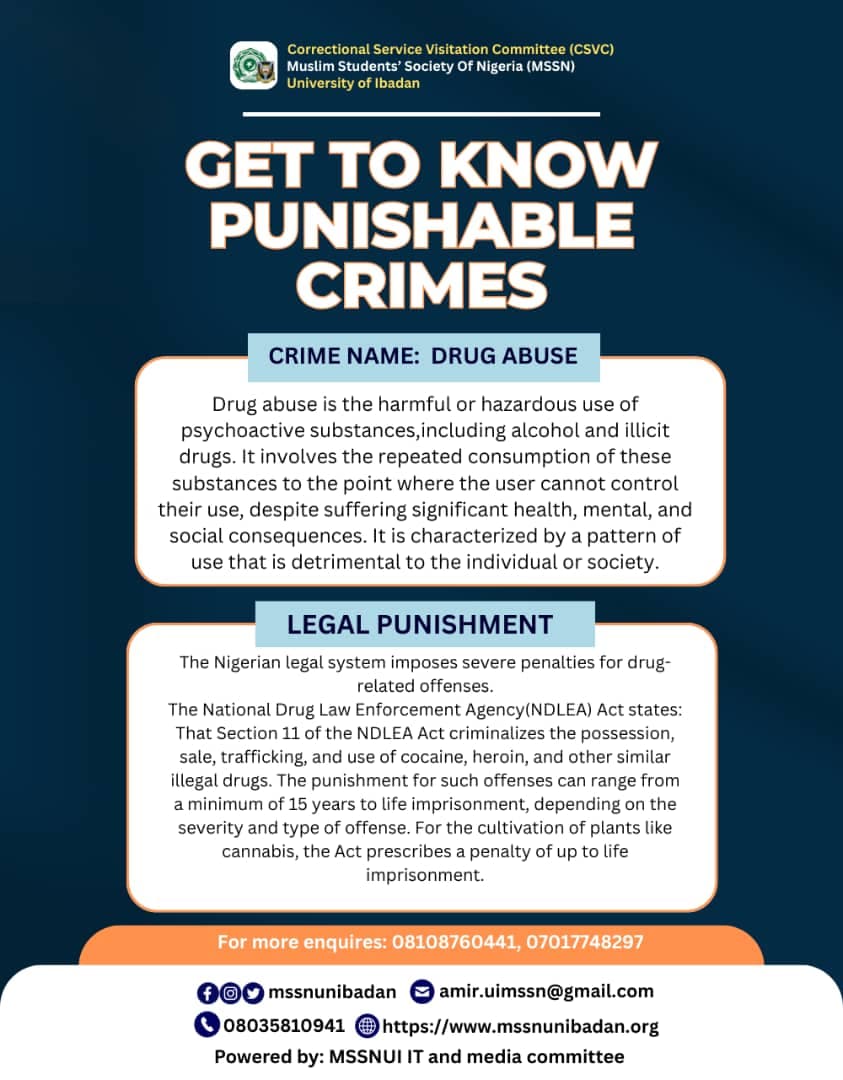
Drug abuse is the harmful or hazardous use of psychoactive substances, including alcohol and illicit drugs. It involves the repeated consumption of these substances to the point where the user cannot control their use, despite suffering significant health, mental, and social consequences. It is characterized by a pattern of use that is detrimental to the individual or society.
Examples:
1. The use of illegal psychoactive substances. This includes the consumption of drugs such as cocaine, heroin, methamphetamine, or cannabis where they are prohibited by law.
2. The misuse of prescription medication. This involves taking prescription drugs, like opioids, stimulants, or sedatives, in a manner or dosage other than prescribed, or by a person for whom they were not prescribed.
3. The excessive or harmful use of legally permitted substances. This refers to the use of substances that may be lawful under national law in a manner that negatively affects one's health, impairs judgment, or leads to risky or disruptive behavior. Even when permitted by law, such usage may still fall under scrutiny when it results in personal harm or legal consequences.
Legal consequence
The Nigerian legal system imposes severe penalties for drug-related offenses.
Section 11 of the National Drug Law Enforcement Agency (NDLEA) Act criminalizes the possession, sale, trafficking, and use of cocaine, heroin, and other similar illegal drugs. The punishment for such offenses can range from a minimum of 15 years to life imprisonment, depending on the severity and type of offense. For the cultivation of plants like cannabis, the Act prescribes a penalty of up to life imprisonment.
Conclusion
Drug abuse is a serious offense in Nigeria with severe legal, health, and social repercussions. This understanding should encourage us to make informed and healthy lifestyle choices, avoid the use of illicit substances, and seek help for ourselves or others struggling with addiction to protect the well-being of our communities.
Remember, seeking help from certified health professionals and support groups is a positive step towards recovery and a drug-free life.
References:
World Health Organization (WHO).
The National Drug Law Enforcement Agency (NDLEA) Act.
This is a publication of the Correctional Service Visitation Committee (CSVC) of the Muslim Students' Society of Nigeria, University of Ibadan (MSSNUI).