

Reading time:3 min read
Understanding Cybercrime: A Crime with Serious Consequences
CSVC
September 29, 2025Introduction
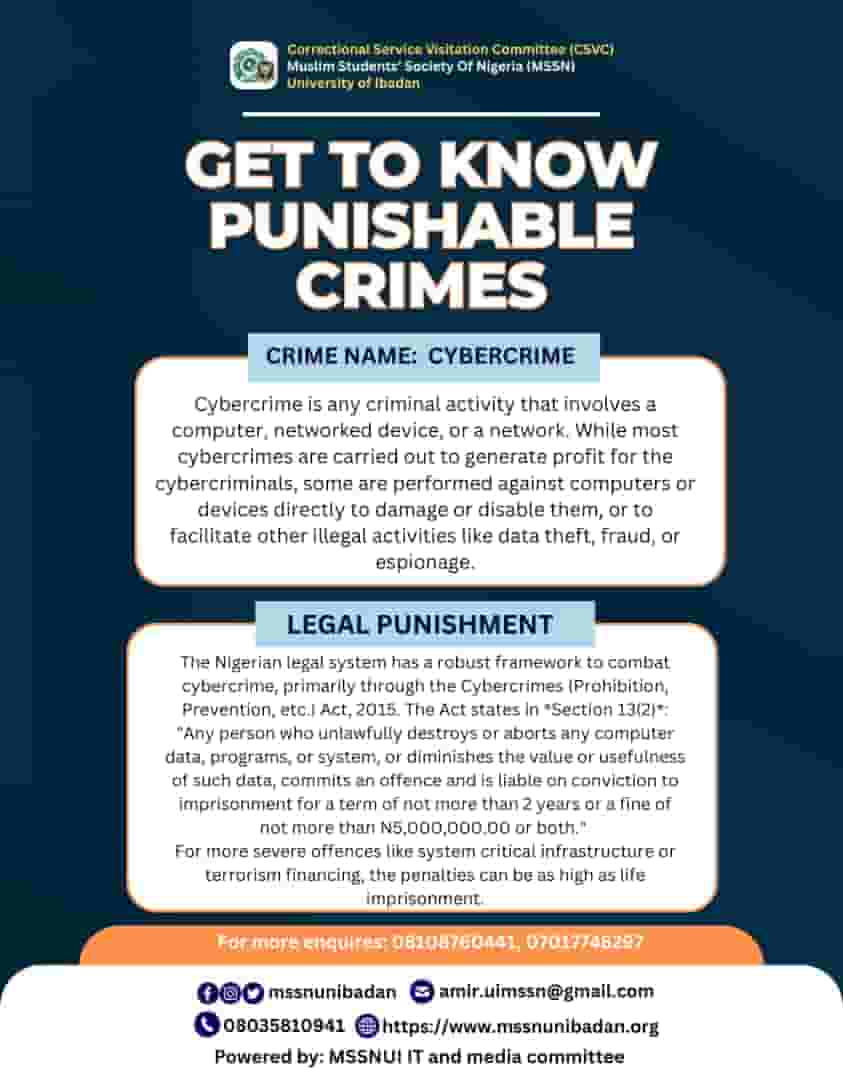
Cybercrime is any criminal activity that involves a computer, networked device, or a network. While most cybercrimes are carried out to generate profit for the cybercriminals, some are performed against computers or devices directly to damage or disable them, or to facilitate other illegal activities like data theft, fraud, or espionage.
Examples
1. Financial Theft and Fraud: This includes online scams, phishing emails designed to steal login credentials, credit card fraud, and identity theft. It also encompasses business email compromise (BEC) schemes that trick companies into transferring funds to criminals.
2. Cyberattacks on Systems and Data: This involves deploying malicious software (malware, ransomware) to damage or hold data hostage, hacking into computer systems to steal sensitive information (data breaches), and launching Denial-of-Service (DoS) attacks to overwhelm and shut down websites and networks.
3. Threatening or Intimidating Behavior Online: This includes cyberstalking, cyberbullying, online harassment, and blackmail using stolen personal information or compromising images (sextortion). These acts create a reasonable fear for one's safety and emotional well-being.
Legal Punishments for Cybercrime in Nigeria
The Nigerian legal system has a robust framework to combat cybercrime, primarily through the Cybercrimes (Prohibition, Prevention, etc.) Act, 2015. The Act states in Section 13(2): "Any person who unlawfully destroys or aborts any computer data, programs, or system, or diminishes the value or usefulness of such data, commits an offence and is liable on conviction to imprisonment for a term of not more than 2 years or a fine of not more than N5,000,000.00 or both."
For more severe offences like system critical infrastructure or terrorism financing, the penalties can be as high as life imprisonment.
Conclusion
Cybercrime is a serious and punishable offence in Nigeria with severe legal and financial consequences. This understanding should encourage us to adopt safe online practices, protect our personal information, and use technology responsibly to safeguard the digital security of ourselves, our businesses, and our nation.
Remember, using strong passwords, enabling multi-factor authentication, and being vigilant against suspicious links and emails can help protect you from becoming a victim of cybercrime.
References
Oxford English Dictionary, Oxford University Press
Cybercrime Act 2015
This is a publication of the Correctional Service Visitation Committee (CSVC) of the Muslim Students' Society of Nigeria, University of Ibadan (MSSNUI).