
Reading time:4 min read
The Day of ‘Arafah: A Tremendous Opportunity for Forgiveness
Abdulkareem Taofeeq
June 04, 2025The 9th day of Dhul-Hijjah, known as Yawm ‘Arafah, is one of the most blessed days in the Islamic calendar. It is the day when millions of pilgrims stand on the plain of ‘Arafāt, supplicating and seeking forgiveness. For those not performing Hajj, it's a day of immense reward and mercy.
The Messenger of Allah ﷺ said: “Fasting on the Day of ‘Arafah expiates the sins of the past year and the coming year.” (Sahih Muslim, 1162)
10 Ways to Make the Most of Yawm ‘Arafah
1. Fasting
The most emphasized Sunnah for those not on Hajj. “...It expiates [sins of] the year before and the year after.” (Muslim, 1162)
2. Guarding the Fast
Avoid what nullifies its reward: lying, backbiting, arguing, and wasting time. Fasting is not just refraining from food and drink. “Whoever does not give up false speech and acts upon it, Allah has no need of him giving up his food and drink.” (Bukhari, 1903)
3. Dhikr & Takbīrāt
Frequently recite:
Tahleel: Lā ilāha illallāh
Takbeer: Allāhu Akbar
Tahmeed: Al-ḥamdu lillāh
Tasbeeh: Subḥānallāh
The Prophet ﷺ said: “The best supplication is the one done on the Day of ‘Arafah.” (Tirmidhi, 3585 – ḥasan)
4. Feeding a Fasting Person
If one is unable to fast (due to menstruation, illness, etc.), feeding a fasting person earns the same reward. “Whoever provides food for a fasting person to break his fast, will earn the same reward without reducing the reward of the fasting person.” (Tirmidhi, 807)
5. Supplicating for Fellow Muslims
The angels say "Āmīn, and for you the same" when you pray for someone else in their absence. “The supplication of a Muslim for his brother in his absence is answered.” (Muslim, 2733)
6. Honoring Parents
Upholding this duty opens the doors to Allah's mercy and blessings. “And lower to them the wing of humility out of mercy and say, ‘My Lord, have mercy upon them as they brought me up [when I was] small.’” (Surah Al-Isrā’, 17:24)
7. Good Character
Allah loves noble manners, and they beautify worship and earn great reward. “The heaviest thing on the scale on the Day of Judgement is good character.” (Tirmidhi, 2002)
8. Istighfār & Sincere Du‘ā
Allah descends on this day and forgives more people than on any other day. “There is no day on which Allah frees more people from the Fire than the Day of ‘Arafah.” (Muslim, 1348)
9. Observing Obligatory Acts
Don’t forget the basics. Pray each Salah on time, ideally in congregation. “The most beloved deeds to Allah are the most consistent, even if small.” (Bukhari & Muslim)
10. Gratitude for Reaching the Day
Thank Allah for witnessing it and meeting the day of ‘Eid al-Adhā that follows. “If you are grateful, I will surely increase you [in favor].” (Surah Ibrāhīm, 14:7)
Islamic Etiquettes of ‘Eid al-Adhā
1. Wear your best clothes (modestly).
2. Recite the Takbīr from Fajr of the 9th until ‘Asr of the 13th of Dhul-Hijjah.
3. Attend the ‘Eid prayer (even menstruating women should attend the gathering).
4. Smile and be joyful with family and friends.
5. Share gifts and meals.
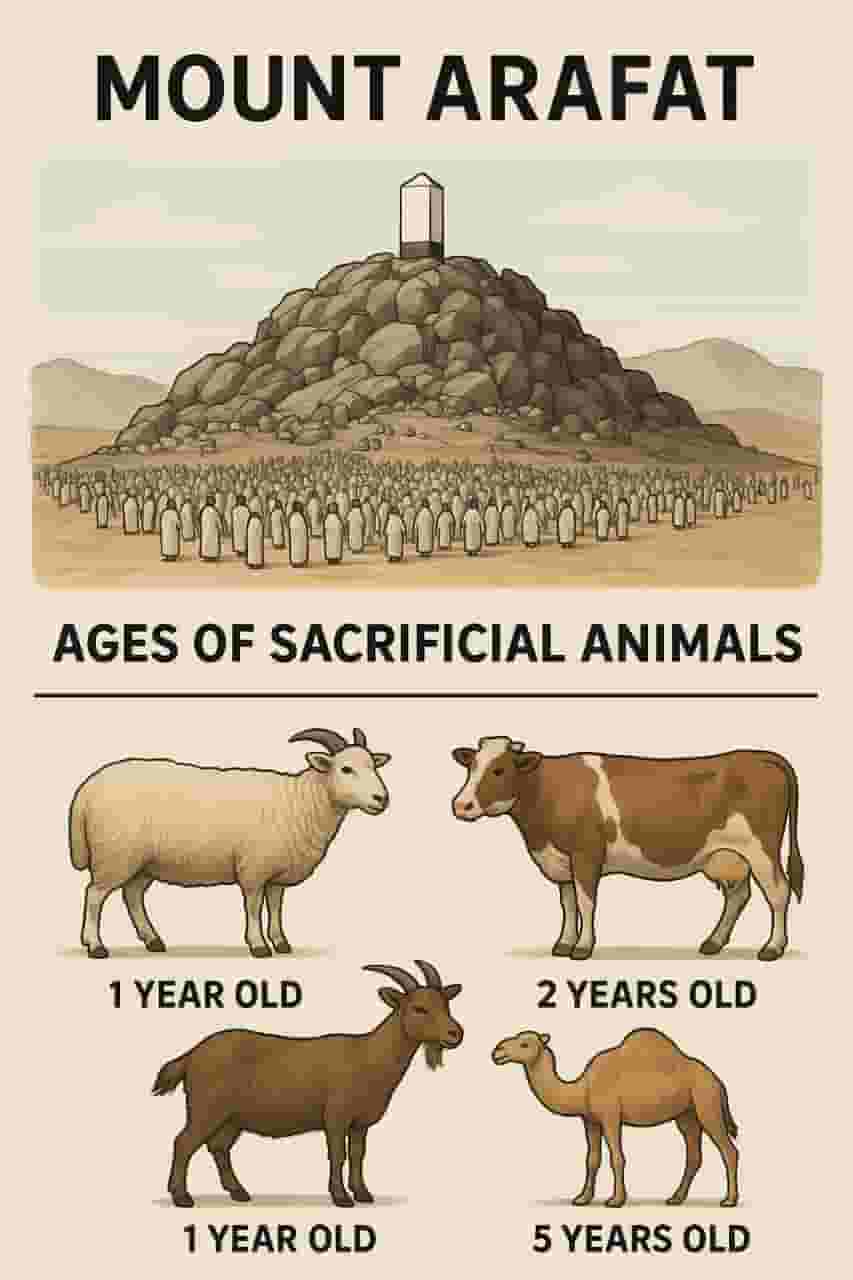
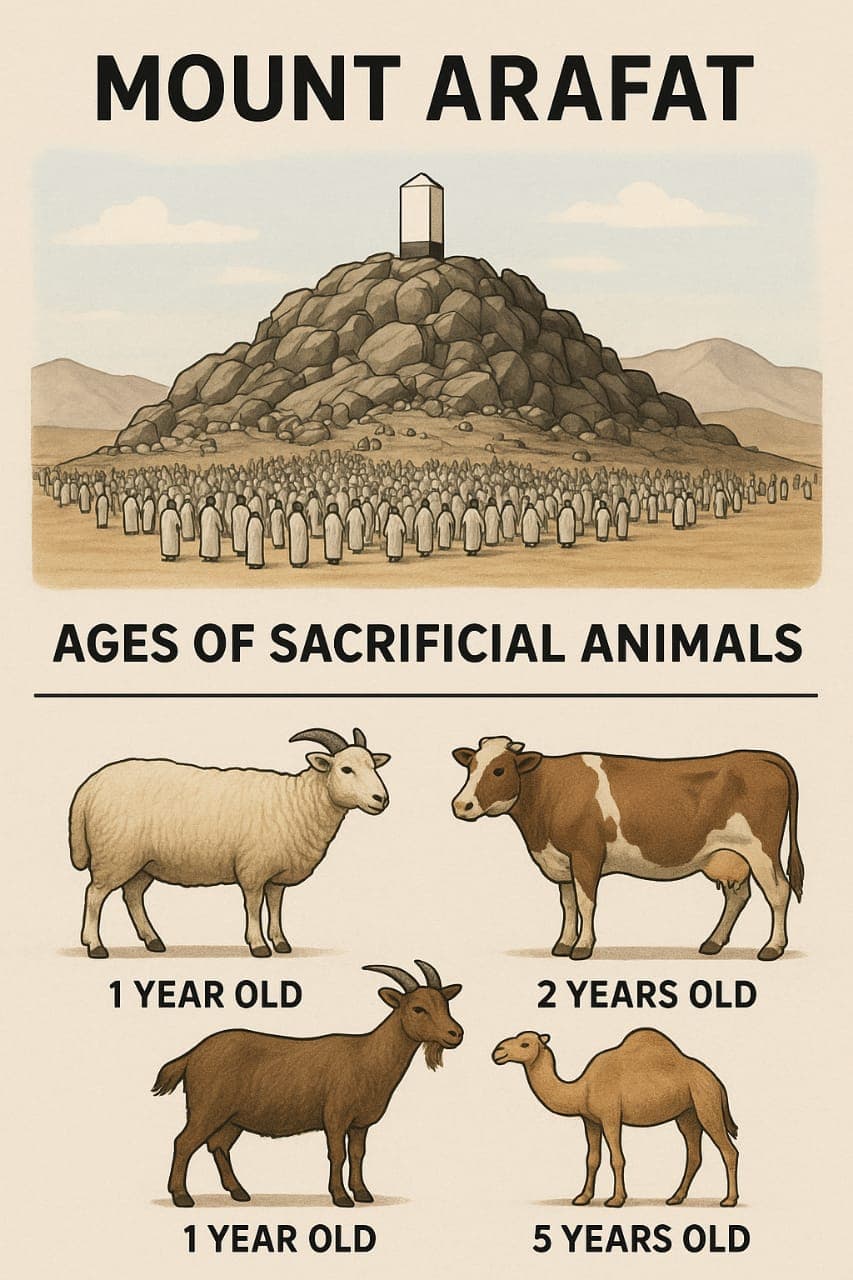
6. Perform the Udhiyah (Qurbani):
Camel: 5 years old
Cow: 2 years old
Goat: 1 year old
Sheep/Ram: 6 months (if healthy)
The Prophet S.A.W. said: “Whoever offers sacrifice before the prayer, he has slaughtered for himself, and whoever offers it after the prayer has completed his sacrifice and followed the Sunnah of the Muslims.” (Bukhari, 954)
7. Avoid sins: Don’t celebrate ‘Eid with music, inappropriate gatherings, or wastefulness.
May Allah allow us to witness Yawm ‘Arafah, forgive our sins, past and future, and grant us many more years upon steadfastness in His religion.
اللهم اجعلنا من عتقائك من النار في يوم عرفة، واجعلنا من المقبولين، الفائزين بجنتك، يا أرحم الراحمين.