

Reading time:14 min read
Eid in Ibadan
Abdulhamid Balogun
May 28, 2026"Musa!"
"Musa!"
"Musa!" She yelled toward the ceiling, aiming for her twenty-three-year-old first son, who had returned from school three days earlier. Receiving only rhythmic snoring in response, she marched down the corridor, opened the door to his room, and gave his big toe a sharp, practiced twist.
"Ah! Mummy! Fire!" Musa jumped up immediately, wiping drool. "Is it time for solah? Did I miss Subh?" He asked, half awake. His bed was wet from sweat, he truly must have had a long deep sleep in contrast to his Mother, Ummu Idris.
"The only thing you are about to miss is your peace of mind," Ummu Idris hissed. "Your twin brother is in the storehouse walking on four legs. Move your legs now before he turns the place upside down!"
Ummu Idris had been awake since 4 AM, a full thirty minutes before her alarm could even remind her to. This year, the stakes were inevitably high: the entire extended family, at least those who lived close to Ibadan, had descended upon their home for Eid al-Adha. From the loud Lagos uncle AbdulKabir's family to Uncle Ishaq's family, "the Alaafinites of Oyo," as Aunty Remi jokingly says, with their army of children.
By 4:15 AM, she was already in the kitchen, her wrapper tied high above her chest like a warrior's armour, a long Qimar and socks on her feet to battle the morning chill. Uncle AbdulKabir's wife, Ummu Zainab, had woken even earlier than Ummu Idris, though not out of devotion, she simply could not sleep through her husband's pre-dawn pacing. She was now in the kitchen beside Ummu Idris, wrapped in a thick shawl, her fingers moving with expert speed as she deboned stockfish.
Ummu Idris was busy picking the scent leaves for the mandatory post-Eid prayer pepper soup when she decided to fetch the pots from the store house. On getting to the store, she was welcomed by the warm, grassy smell of the ram.
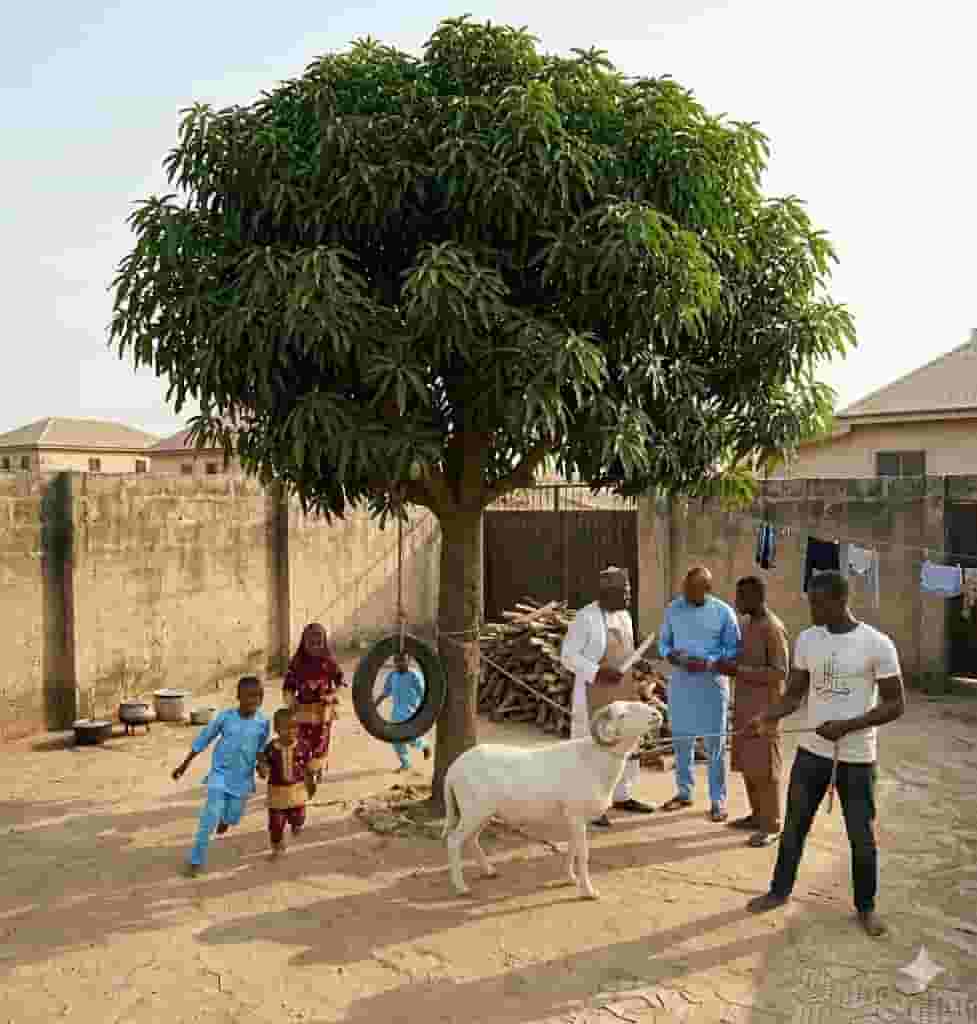
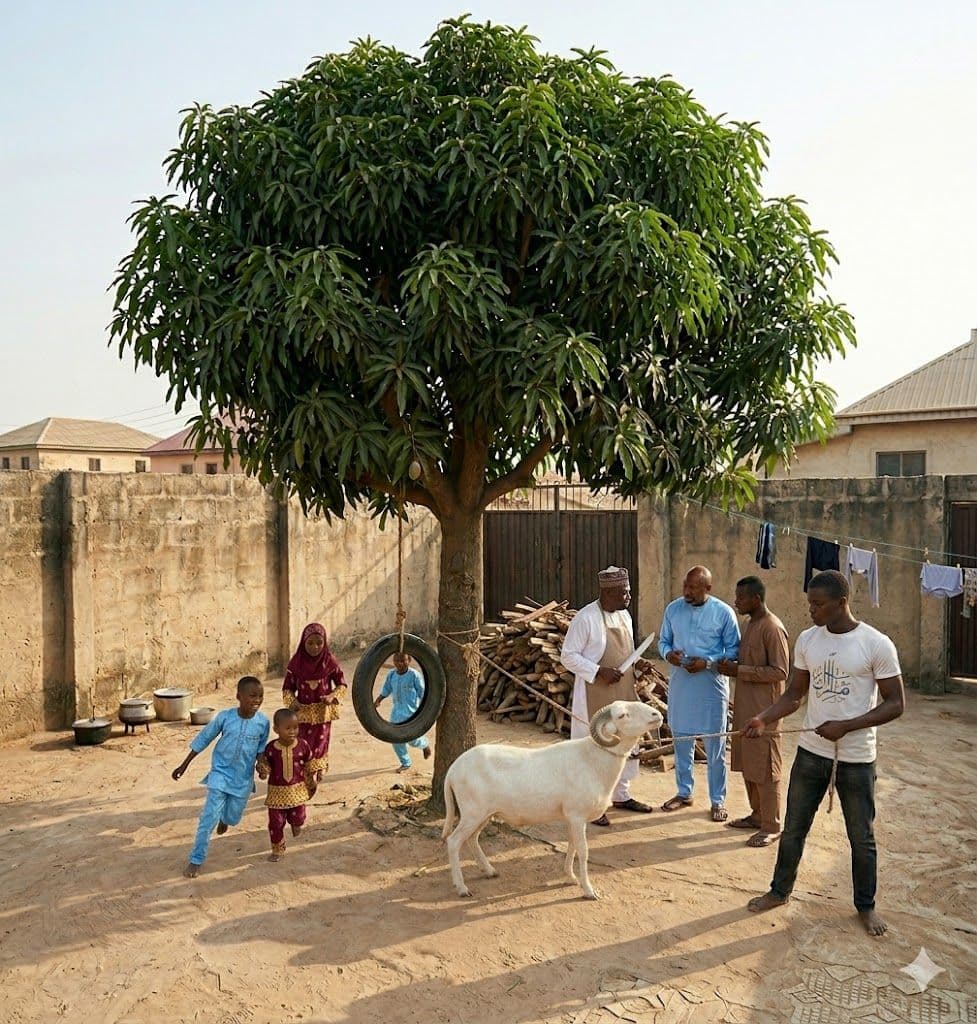
The very ram Abu had bought seven days ago was currently sniffing her stainless-steel catering pots. It was bought from a man on the expressway, while they were returning from a program. The man had sworn that it was the finest in Ibadan. Truly, the ram was large, healthy, and stubborn, just like Musa, except that it walked on four limbs.
Musa scrambled out of bed. This was the same ram that had escaped the same day Musa returned, leading Musa on a three-block chase that only ended because the plank tied to its rope incidentally got hooked to a large tree, inhibiting its movement. It was caught sweating and ashamed of itself.
He remembered the event that happened the previous year, at Uncle AbdulKabir's house, which almost left them with no meat to eat. The ram which was left at the backyard had disappeared in the morning, throwing the house into turmoil. If not for vigilantes, it would have been an eyesore. This event made him take the ram to the store the previous night – at least it would be safer there. With a huge burst of morning energy, Musa wrestled the stubborn beast back to the yard.
Immediately after Solatul Subh, the house became a theatre of chaos. Eid al-Adha – the big festival, commemorating the great test of Prophet Ibrahim (AS), when Allah commanded him to sacrifice his beloved son, Isma‘il (AS), before replacing him with a ram, was supposed to be a day of spiritual reflection. Instead, it felt like the Olympics.
The bathrooms became a battlefield. Everyone was enjoying the coolness of the water, as it was Sunnah to perform Ghusl (ritual bath) before the Eid prayer. The children were busy enjoying the warmth of the water, keeping the adults waiting.
"Who is in the bathroom?!" Uncle AbdulKabir shouted, banging on the door while wearing nothing but a towel and a fierce look. "I have been standing here since Fajr!"
"Lower your voice," Ummu Zainab called calmly from the kitchen, without looking up from her pot. "You will wake the neighbours and disgrace us before the ram even gets the chance to."
Meanwhile, in the living room, Abu Idris was trying to enforce another Sunnah – eating nothing before going to the prayer ground (unlike Eid al-Fitr, where you eat breakfast first). This was a massive problem for the children.
"Abu, I am fainting," five-year-old Idris groaned, sprawling dramatically across the rug. "I have not eaten since yesterday!"
"Stand up, young man," Abu scolded, adjusting his white Jalabia. "We fast until after the slaughter. It teaches patience. Look at your cousin, Khalid, is he complaining?"
Khalid wasn't complaining because he was currently behind the sofa, secretly shoving a leftover piece of bread into his mouth.
By 8:30 AM, the family was finally dressed in their finest clothes, complying with the Sunnah of wearing one's best garments. The sitting room looked like a glittering textile factory, a fashion parade for the ages. Uncle AbdulKabir's family were all dressed up in the same attire, Ummu Zainab radiant in deep burgundy and gold, coordinating her children with the quiet authority of a general. Uncle Ishaq's family matched beautifully in sky blue, Ummu Safiyah adjusting her youngest child's cap with steady, unhurried hands. Musa and Idris were not left out, unlike Aunty Remi, who had no one to match with.
Ummu Idris took a look at Uncle AbdulKabir's heavily starched Agbada and smiled. Two Eids ago, Uncle AbdulKabir had bought a fabric so stiff and cheap that when he sat down at the prayer ground, the trousers literally split down the middle with a sound like a gunshot right during the quiet moment of the Khutbah.
"We would take a different route back from the Eid ground!" Abu Idris announced as they trooped out.
"Why, Abu?" Zainab asked, tripping over her long hijab.
"Because it is one of the Sunnah of this day, my girl," Abu explained patiently. "The Prophet Muhammad (SAW) passed through one route to the prayer ground and returned through another, so that the angels on both paths can witness our gathering, and we can spread greetings of peace to more people."
As they walked down the street, the air was filled with the beautiful, resonant chants of the Takbeer from all angles of the street.
Allahu Akbar, Allahu Akbar, Allahu Akbar, La ilaha illa Llah, Allahu Akbar walillahi-l-hamd.
The children tried to join in, but by the third repetition, Idris was already out of line.
The Eid prayer was brief but beautiful; two rak‘ahs filled with extra takbeers that echoed across the prayer ground as numerous voices rose together in praise of Allah. After the prayer, the Imam delivered a heartfelt sermon on obedience, sacrifice, and charity. The congregation then waited as the Imam performed the symbolic slaughter of his ram, after which families gradually began making their way home to carry out their own sacrifices.
Along the road, the children ran joyfully ahead while the adults walked behind, chatting warmly as the takbeers filled the morning air.
Getting home, the backyard immediately turned into an arena. The children played around the ram. On the other hand, the men, led by Abu Idris, were set to sacrifice the ram in the name of Allah, but the ram itself wasn't ready. It kept looking around like a thief searching for an escape route.
According to Islamic tenets, the animal must be treated with utmost kindness, the knife must be incredibly sharp so the death is instant and painless, and the animal must never see the knife being sharpened.
"This knife is so sharp, one slice and it will be over in a blink," Abu Idris bragged.
The ram, however, had other plans. The moment Musa and Uncle Ishaq grabbed its legs to lay it on its left side toward the Qiblah, the ram unleashed the strength of ten of its ancestors. It kicked blindly.
Its hoof connected perfectly with Uncle Ishaq's face, leaving him fighting not to embarrass himself in the presence of the kids, but he couldn't help it.
"Yee! My eyes!" Uncle Ishaq yelled, dancing on one foot in the dirt.
The children erupted into cheers. "The ram is winning!" Idris shouted.
From the kitchen doorway, Ummu Safiyah watched her husband hop across the dusty yard, one hand clapped over his eye. She pressed her lips together, trying very hard not to laugh and quietly went back inside to fetch a clean cloth and cold water.
"Shut up!" Musa yelled, covered in sweat. He had, together with Uncle AbdulKabir, finally pinned down the ram. Abu Idris quickly recited, “Bismillahi, Allahu Akbar” (In the name of Allah, Allah is the Greatest), and swiftly performed the sacrifice.
By the time of Solatul Dhuhr, the kitchen was already an absolute powerhouse. The aroma of the traditional scent-leaf pepper soup filled the compound, acting as the perfect appetizer before the main rice was ready. Ummu Zainab stood over her pot with the focused expression of a woman who had never once under-seasoned anything in her life, occasionally waving away the children who crept close hoping to steal a taste.
Ummu Idris sat by a massive tray, carefully separating the meat into portions for the family, for neighbours and friends, and for homes where meat might not enter again for a long while. Uncle Ishaq's wife, Ummu Safiyah, sat across from her at the tray, quietly wrapping the charity portions into neat bundles of nylon and foil. She was methodical, soft-spoken, the kind of woman who noticed when the salt was running low before anyone thought to check. Every few minutes, she glanced toward the backyard and pressed her lips together again in that same familiar way.
"Ummu," Musa complained, looking at the large heap meant for charity. "The leg is too big. Can't we keep that for the barbecue tonight?"
"Musa, do you want me to twist your toe again?" Ummu Idris threatened. "One of the main purposes of this day is charity. We feed those who cannot afford it. If you want barbecue, go and buy your own chicken."
Ummu Safiyah said nothing. She simply added the leg to the charity bundle and tied it firmly, before Musa could think of another argument.
Outside, the children were playing a dangerous game, chasing one another all around the compound. Idris held one of the ram's horns and chased Khalid into the sitting room, where they promptly knocked over Uncle AbdulKabir's cup of hibiscus juice (Zobo) onto the cream rug.
"EII! ZOBOO! Aunty Remi screamed from the kitchen. "Who spilled the Zobo?!"
Ummu Zainab emerged from the kitchen a half-second behind Aunty Remi, took one long look at the spreading red stain, and turned to face the suddenly empty room. "Khalid," she said, very quietly, which was somehow more terrifying than any shout. The curtain near the window twitched.
A collective silence fell over the house. The children had scattered like cockroaches when the light came on. Idris hid inside the empty wardrobe, while Khalid attempted to blend in with the curtains.
By nightfall, peace had finally settled over the compound. The extended family was completely stuffed, sitting in a massive circle in the living room. The Zobo stain on the rug was poorly covered by a small foot mat. Uncle Ishaq sat with an ice pack over his left eye, muttering about how the ram had clearly been trained to hit him. Beside him, Ummu Safiyah had pressed a cold bottle of Zobo into his hand and whispered something that made him laugh. Across the room, Ummu Zainab was already planning next year's Eid fabric out loud. “Something soft,” she insisted, staring at her husband to remind him of his stiff Agbada. Uncle AbdulKabir opened his mouth, caught her eye, and shut it back.
The children were scattered everywhere now, defeated by food and exhaustion. Idris slept sideways across two cushions with one of the ram’s horns still clutched tightly in his hand like a trophy. Khalid lay half under the centre table, pretending not to be asleep whenever someone called his name.
Outside, the smoky scent of roasted meat still lingered faintly in the cool Ibadan night air. From distant compounds came bursts of laughter, clattering plates, and the fading sounds of celebration drifting from house to house like a familiar song.
The great ram of Ibadan was now reduced to a few bones resting inside a black pot in the kitchen having successfully fulfilled its destiny.
Ummu Idris leaned back slowly against the sofa. Her legs ached. Her wrapper was stained with palm oil and pepper. A mountain of dishes still waited for her in the kitchen. Yet as she looked around the crowded room, at the sleeping children, the laughing adults, the stained rug, the unfinished bottles of Zobo, and the warmth that only family could create, the anxiety that had pulled her awake before dawn finally melted away.
Then, from a nearby masjid, soft and distant against the quiet night, came the Adhan for Solatul Maghrib –
“Allahu Akbar, Allahu Akbar…”
The room fell silent for a brief moment. Ummu Idris closed her eyes and smiled.
It had been loud. It had been messy. It had been exhausting.
But Alhamdulillah, it had been a perfect Eid.