

Reading time:10 min read
Meet-the-Scholar: An Interview with Jamiu Abdullateef
Tohir Najimdeen
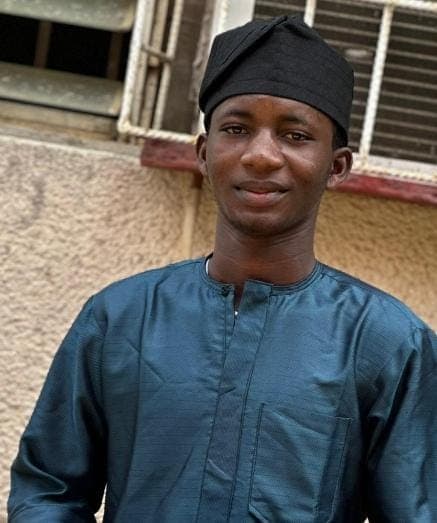
May 01, 2026This week’s “Meet-the-Scholar” features Jamiu Abdullateef, a 400-level Political Science student of the University of Ibadan and the Coordinator of FATSSSA and NESA MSSNUI. In this interview conducted by Tohir Najimdeen, Jamiu Abdullateef reflects on his academic journey, leadership experience, challenges, and aspirations shaped by his studies and responsibilities.
You are in your final year in Political Science and you have consistently excelled academically, earning you a first-class grade. What primarily drives your academic success?
What truly drives my academic success is a deep sense of purpose. From my early days in the university, I came to the realization that education is not just about passing exams, but about building capacity for impact. As a Political Science student, I constantly remind myself that the knowledge I acquire today will shape how I contribute to governance, policy, and society tomorrow. Beyond that, I am also motivated by responsibility, responsibility to my family, to those who believe in me, and even to those who look up to me unknowingly. I don’t just want to succeed for myself, I want my journey to be a reference point for others. That mindset has kept me disciplined and consistent over the years.
Describe your academic journey so far, including any notable challenges or memorable experiences.
My academic journey has been both challenging and deeply rewarding. Transitioning into the university system was not as smooth as I initially thought. There was the pressure of adapting to a new learning environment, understanding academic expectations, and managing time effectively.
One of the major challenges I faced was balancing academics with increasing leadership responsibilities. There were times I felt stretched, especially during peak academic periods when deadlines and responsibilities collided. However, those moments shaped me the most they taught me resilience, planning, and prioritization.
A memorable experience for me was realizing in my 100 level that I could actually sustain a first-class grade. That moment changed my mindset completely. It shifted me from just trying to do well to being intentional about excellence. Since then, every semester has become a personal commitment to maintain that standard.
In your 300-level days, you were the Circle of Preliminary Economics and Social Sciences Muslim Students (CPESMS) Coordinator. What was your experience like, and what did you learn from it?
Serving as the CPESMS Coordinator in my 300 level was a defining experience for me. It exposed me to real leadership beyond titles. I had to coordinate people, manage expectations, and ensure that both academic and spiritual objectives of the association were met.
One major lesson I learned was that leadership is more about service than authority. You have to listen, understand people’s needs, and sometimes make sacrifices for the collective good. I also learned how to manage diversity, different personalities, different expectations and still bring everyone toward a common goal.
That role strengthened my communication skills, my patience, and my ability to lead under pressure.
How do you balance your leadership responsibilities with your academic commitments?
Balancing leadership and academics is not something that happens automatically; it requires intentional structure. I rely heavily on planning and prioritization. At the beginning of each week, I map out my academic tasks alongside leadership commitments.
I also understand the importance of discipline. There are times when I have to say no to certain engagements to protect my academic time. At the same time, I make sure that when I’m in leadership spaces, I give my best.
Another key factor is delegation. Leadership is not about doing everything yourself. I work with reliable team members and trust them with responsibilities, which allows me to maintain academic focus.
Outside of academics, what other interesting things do you do?
Outside academics, I engage in activities that help me grow intellectually and personally. I enjoy reading beyond my coursework, especially on politics, leadership, and societal development. It helps me connect theory with real-life issues.
I also spend time mentoring younger students, particularly freshers. It gives me a sense of fulfillment knowing that I can guide someone through challenges I once faced.
Additionally, I value moments of reflection and quiet time. It helps me stay grounded and maintain clarity in everything I do.
In your role as FATSSSA and NESA MSSNUI Coordinator, what initiatives have you implemented to improve academic performance, particularly for freshers, and how do you evaluate their effectiveness?
In my role as FATSSSA and NESA MSSNUI Coordinator, I introduced an approach I like to describe with the acronym “UI” — You and I. For me, it represents the idea that academic success is not an individual journey, but a shared responsibility. It’s about moving from “me” to “we”, where you and I support each other in seeking knowledge.
One of the key initiatives built around this concept was organizing academic and spiritual orientation sessions for freshers. In these sessions, I emphasize that seeking knowledge is not just for personal gain, but an act of ibadah. When students begin to see learning as a responsibility before Allah, their commitment naturally deepens.
I also encouraged the formation of UI Study Circles, peer learning groups where students come together not just to read, but to teach, guide, and uplift one another. The idea is simple: you and I are accountable for each other’s growth. This aligns with the Islamic principle of unity, where believers strengthen one another.
Another important initiative was mentorship. I worked on connecting freshers with senior students who could guide them academically and morally. Through this, the UI philosophy becomes practical; learning is no longer isolated, but shared.
In evaluating the effectiveness of these initiatives, I look beyond just academic results. I observe how students engage with one another, how consistent they become, and how they begin to embody the same spirit by helping others. When I see students who were once struggling begin to improve and even support their peers, it shows that the UI model is working.
You have been a first-class student since 100 level and now in your final year. How did you achieve this consistency?
Consistency, for me, comes from discipline and clarity of purpose. I don’t wait until exams are close before I start reading. I try to stay engaged with my studies throughout the semester.
I also focus on understanding rather than memorizing. Political Science requires critical thinking, so I make sure I truly grasp concepts and can relate them to practical issues.
Another important factor is self-evaluation. After every test or exam, I reflect on my performance, what worked and what didn’t and I adjust accordingly. That continuous improvement mindset has helped me maintain my grades.
How do you manage the stress and pressure of balancing leadership responsibilities with your field of study?
Managing stress is something I’ve had to learn over time. One thing that helps me is staying organized when I know what I need to do and when to do it, it reduces anxiety.
I also take breaks when necessary. I’ve come to understand that rest is not a weakness, it's part of productivity.
Most importantly, I maintain a positive mindset. There will always be pressure, but I try not to let it overwhelm me. Instead, I see it as part of the growth process.
Beyond academics and leadership, what are your personal interests or hobbies?
Personally, I enjoy reading, mentoring, and engaging in meaningful conversations about societal issues. I also appreciate moments of quiet reflection, which help me stay focused and aligned with my goals. These interests may seem simple, but they play a big role in shaping who I am and how I approach life.
What advice do you have for students, particularly freshers, who aim to achieve academic success?
My advice to freshers is simple: be intentional from the beginning. Don’t wait until things become difficult before you take your academics seriously.
Attend classes, ask questions, and surround yourself with people who are focused. Also, learn how to manage your time early. It will save you a lot of stress.
Finally, believe in yourself. Achieving academic success is not about being the smartest person; it’s about consistency, discipline, and the willingness to keep improving.