
Reading time:13 min read
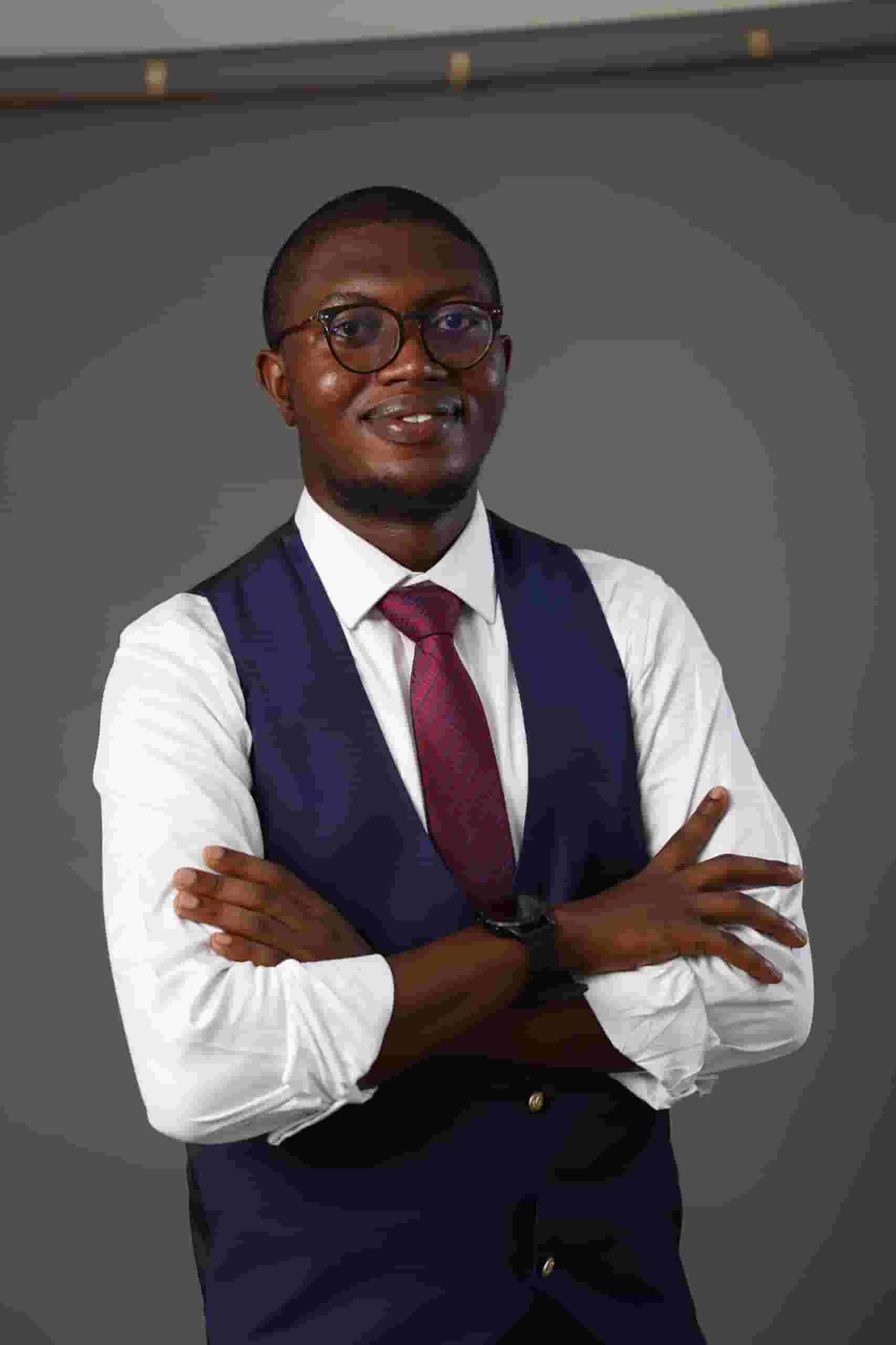
Interview: “I Prefer to Stay in the Background...” — Abdulbasit Olayinka, Former DOS
Aishah Oyetunji
February 25, 2026Abdulbasit Olayinka is an Electrical and Electronics Engineering graduate of the University of Ibadan. Beyond his academic pursuits, he distinguished himself as a committed leader, serving in key roles within the Muslim Students’ Society of Nigeria (MSSN) and as president of the Association of Muslim Engineers, Technologists, and Technicians Students Affiliate (AMETT-SA). In this interview, Abdulbasit shares insights from his campus journey, reflecting on leadership, academic excellence, and the lessons that have shaped his growth and aspirations.
How do you feel after the completion of your degree programme?
I feel grateful to Allah for the opportunity and strength to complete this phase of my life. It has been a journey of growth academically, spiritually, and in leadership. There were challenges, but each one shaped me into a better and more responsible person. In all, I feel fulfilled and thankful to Almighty Allah.
What inspired you to choose University of Ibadan while seeking admission and how sure were you that you would be admitted?
Choosing the University of Ibadan was a deliberate decision shaped by both ambition and experience. I was one of the best students in my secondary school, and I have always aimed for excellence. While researching universities, I discovered that the University of Ibadan is widely regarded as the best university in Nigeria, followed closely by Obafemi Awolowo University.
Initially, during my first JAMB attempt, I chose Obafemi Awolowo University because I doubted whether I could meet the high standard required for UI. However, after discussions with family friends particularly Barrister Mujib Jimoh, who had studied at UI, I was encouraged to aim for the best, especially because of the university’s transparency and academic standard. I then changed my choice to the University of Ibadan.
In my first attempt, I scored 289 in JAMB but missed the cut-off for Electrical and Electronics Engineering by about 0.14 points. That experience was painful but motivating.
The following year, I prepared even more seriously. I attended tutorials, engaged in group studies, and remained consistent. I told myself that if I did not score above 300 in UTME, I would consider changing to a less competitive engineering course. I eventually scored 293 and felt discouraged, but my father encouraged me not to change course and prepare thoroughly for the PUTME.
I can confidently say I had never prepared for any exam the way I prepared for that Post-UTME. I studied with intense focus and determination. Although nothing was guaranteed because admission into UI is highly competitive, I gave it my absolute best.
Alhamdulillāh, when the results were released, I had comfortably surpassed the cut-off mark and was admitted.
I was never completely certain I would gain admission, but I was certain about my effort. I put in hard work, consistency and full dedication, and Allah crowned it with success.
You served as a member of the MSSNUI Central Executive Council at a point during your time on campus. What was that experience like?
Serving as a member of the MSSNUI Central Executive Council was one of the first major leadership responsibilities I took on as a student, and it shaped me significantly.
One of the biggest lessons I learned was sacrifice. Leadership in MSSNUI was not symbolic, it required real commitment. I remember during one of our orientations, we were told that whenever the Amir calls, you should answer, no matter the time, because you may not know the urgency of the matter. That statement stayed with me.
There was a particular incident when I was preparing for a very difficult course with a colleague who was helping me revise. We had a test in a few days, and I knew I was not fully prepared. At that moment, I received a call from the Amir, and it required my immediate attention. It was not convenient, but it was important. I had to excuse myself and attend to the responsibility. That experience taught me that leadership sometimes demands uncomfortable sacrifice for the greater good.
Another major impact was the strong sense of brotherhood. We worked closely together, supported one another, and held each other accountable. As a CEC member, you are constantly reminded that leadership is a trust. If you fall short, you will be questioned, not for criticism’s sake, but to uphold the integrity of the responsibility. It taught me seriousness and accountability.
The exposure was also invaluable. I had the opportunity to meet and interact with respected personalities such as Prof. SHA Malik, Prof. DOS Noibi, Prof. Aderinoye, and the late Prof. Abdulganiy Raji (May Allah forgive his shortcomings). Listening to their life experiences and advice broadened my perspective and refined my thinking. Those moments were deeply impactful.
Overall, serving as a CEC member was demanding, but it was also one of the most transformative experiences of my university life. Alhamdulillāh.
Having served as the DOS for MSSNUI and MSSN AAC, what were some of the biggest challenges you faced?
One of the biggest challenges was balancing leadership with academics. As a Techite, the academic workload is already intense. Trying to serve effectively while performing the duties expected of me as a student required serious discipline.
Another major challenge was managing people. Leadership is about people, different temperaments, different levels of commitment, and sometimes conflicting opinions. There were moments of misunderstanding and low motivation among my team members. Thus, learning patience and emotional intelligence became necessary.
Additionally, decision-making under pressure was not easy. As the DOS, you are expected to solve problems quickly and sometimes take responsibility for outcomes that are not entirely in your control.
However, through all these challenges, there was growth. Alhamdulillāh.
Between serving as DOS of MSSN AAC and MSSNUI, which was more taxing?
Both roles were demanding in their own ways, but I would say serving as the DOS of MSSN AAC was more taxing.
At MSSNUI, the major responsibility revolved around coordinating tutorials, which were mostly structured around weekends. While it required planning and consistency, it was relatively periodic.
However, at MSSN AAC, it felt like a full-time responsibility. Activities ran from Monday to Friday, sometimes even extending into weekends. Planning and execution were daily commitments.
In fact, during my final year when I was appointed DOS of Extramural, I can hardly count the number of times I slept in my room at Zik Hall in second semester. Extramural practically became my primary base because of the workload and constant coordination required.
Despite how demanding it was, Alhamdulillāh, Allah made it manageable. With the support of my assistant directorates, my Amir, and other executive members, the responsibilities became easier to carry.
How did you come to serve as president of the Association of Muslim Engineers, Technologists and Technicians Students Affiliate (AMETT-SA)?
Becoming the president of the Association of Muslim Engineers Technologists and Technicians Students Affiliate was something I never actively pursued. Honestly, I see it as the will and decree of Allah.
Naturally, I am a reserved person. I prefer to stay in the background rather than be at the forefront. So leadership at that level was not something I imagined for myself.
AMETT-SA adopts a Shūrā-based system of selecting leaders, so positions are not contested through campaigns or voting but through consultation and trust. I was part of the association from its early days in my 100 Level.
In my first and second tenures, I was appointed as the Financial Secretary. By the third regime, I was unexpectedly appointed as President. It came as a surprise to me because I did not see myself as the most qualified person. However, I accepted it as a responsibility and a trust.
Alhamdulillāh, with sincerity, teamwork, and reliance on Allah, we did our best to move the association forward.
As the president of AMETT-SA and a leader in other organisations, how did you balance your academic responsibilities with your leadership roles?
Balancing my academic responsibilities with leadership roles required structure, discipline, and conscious prioritisation. However, I must admit that balancing both was one of the hardest things for me. It was not easy at all. In reality, there is never a perfect balance because academics and leadership require different levels of attention and time, and there are always unexpected emergencies.
During my final year, I was serving as the National President of AMETT–SA and as the Director of Studies of MSSN Akinyele Area Council Extramural while preparing for my final examinations. At several points, all these responsibilities demanded my attention simultaneously.
To manage this, I relied on three key strategies: planning, delegation, and accountability.
First, I planned my time carefully. I structured my schedule to clearly define academic periods and leadership commitments. When examinations approached, academics took greater priority, and I adjusted other responsibilities where necessary.
Second, I delegated effectively. I understood that leadership is not about doing everything alone. I entrusted responsibilities to capable executives in AMETT–SA and to assistants in the Directorate. This reduced pressure and ensured that activities continued smoothly even when I focused on academics.
Third, I maintained a strong academic support system. From 200 level, I was part of a study group called Elect Geeks, where we consistently organized tutorials, shared materials, and held one another accountable. That structure played a major role in ensuring my leadership commitments did not negatively affect my academic performance.
Ultimately, balancing both required sacrifice, discipline, and reliance on Allah. It was demanding and sometimes overwhelming, but the experience strengthened my capacity for responsibility, delegation, and time management.
What are your plans after the completion of your degree programme? Are you considering marriage anytime soon?
After completing my degree, my plans focus on three main priorities: furthering my education, establishing my career, and eventually getting married. These goals are not mutually exclusive, and I believe it’s possible to pursue more than one at the same time.
As for marriage, yes, it is something I am considering in the near future, in sha’Allah, when the time and circumstances are right.
Finally, what advice would you give to students aiming to excel academically while taking on leadership roles alongside?
Excelling academically while serving as a leader requires a clear understanding of the purpose. You must constantly remind yourself why you are doing both. When your intention is rooted in serving Allah, leadership stops feeling like a burden. At the same time, you have to be honest about your priorities.
It also demands structure. You cannot move carelessly and expect excellence. Planning your time and reading ahead during lighter weeks will save you from unnecessary pressure. Learn to delegate and trust your team; leadership is not about carrying everything alone but about training people who'll carry on your legacy.
Above all, understand that to attain the "balance", you have to be intentional about it. It will stretch you, but it will also shape you. With reliance on Allah, it is absolutely possible to lead effectively and still excel academically, bi idhniLlah.