
Reading time:13 min read
From Resilience to Excellence: Abdulmumeen Abiodun Balogun's Inspiring Journey
Azeezah Durotola
June 06, 2025In this interview, Abdulmumeen Abiodun Balogun, the Best Graduating Student of the Department of Petroleum Engineering, University of Ibadan, for the 2023/2024 Academic Session, shares his inspiring academic journey, revealing the experiences, challenges, and strategies that contributed to his remarkable success. With a CGPA of 3.86, Abdulmumeen opens up about his motivations, extracurricular activities, and valuable insights for students seeking to excel.
How excited were you when you were announced the Best Graduating Student of the Department of Petroleum Engineering, University of Ibadan?
When I was announced as the Best Graduating Student of the Department of Petroleum Engineering, I felt an overwhelming sense of gratitude and accomplishment. Despite the many responsibilities and extracurricular activities I engaged in, as well as the challenges I faced, it was truly humbling to be recognized for my hard work and dedication. I had always tried to balance my academic pursuits with other commitments, and it wasn’t always easy. However, I’m grateful to Allāh for His guidance, and to my family, friends, and mentors for their continuous support. This recognition is a testament to their encouragement and to the resilience I developed through overcoming obstacles. I’m excited to have been able to attain this achievement, and I hope it serves as an inspiration to others who may feel that balancing everything is too difficult.
What inspired you to study Petroleum engineering? Was it a passion that developed over time, or did you discover it during your academic journey?
Throughout my academic journey, I had a strong foundation in mathematics, which remained consistent. When I reached senior secondary school, I discovered that I also had strengths in physics, chemistry, and further mathematics. At that point, I realized that engineering was the natural path for me, so I decided to pursue it. Although I was open to any engineering discipline, my dad suggested petroleum engineering after doing some research on its opportunities, and I agreed. That’s how I ended up choosing petroleum engineering.
You graduated with a CGPA of 3.86. What was your greatest motivation for achieving academic excellence and how did you remain focused throughout your study years?
My greatest motivation for achieving academic excellence was, first and foremost, my desire to make my family proud, especially my parents. Another key motivation was to demonstrate that being a devout Muslim does not hinder academic excellence, and that faith and hard work can go hand-in-hand. Allāh's guidance played a significant role in keeping me focused and committed to my studies. I always sought to strengthen my connection with Him, trusting that with His help, I could overcome any challenges and excel. This mindset, combined with my determination to represent myself and my family well, kept me focused throughout my study years.
What do you think contributed to your success as the Best Graduating Student of the Department of Petroleum Engineering?
A number of factors contributed to my success. First was Allāh’s guidance, nothing would have been possible without that. Secondly, I maintained a consistent level of hard work and discipline throughout my time at the university. I tried to stay organized, manage my time effectively, and always gave my best to both academic and non-academic tasks.
Another major factor was the support system I had, my family, friends, and mentors who encouraged me, prayed for me, and believed in me. I also made sure to stay focused on the bigger picture, which helped me remain committed even when things got tough. I believe combining all these, with genuine dedication and the help of Allāh, is what helped me come out as the Best Graduating Student.
Were you a member of any association when you were on campus?
Yes, I was actively involved in several student associations during my time on campus. I was a committed member of the Society of Petroleum Engineers, University of Ibadan Chapter (SPEUI), throughout my stay in school. In my final year, I also served as the Academic Team Lead, a role that allowed me to contribute academically and help organize training and academic sessions for students in the department.
I was also a member of the Technology Students’ Association (TESA), which comprises students from all departments within the Faculty of Technology. Being part of this body helped foster a strong sense of belonging and collaboration among tech students across various departments.
Additionally, I was a member of the Data Science Nigeria University of Ibadan Branch (DSNUI), which played a significant role in introducing me to the tech and data space. It was through DSNUI that I got to know about the AI hackathon I participated in, and they also provided a platform for upskilling in data science and related fields.
Walk us through some of the organisations you've been involved with and the volunteering experiences you've had.
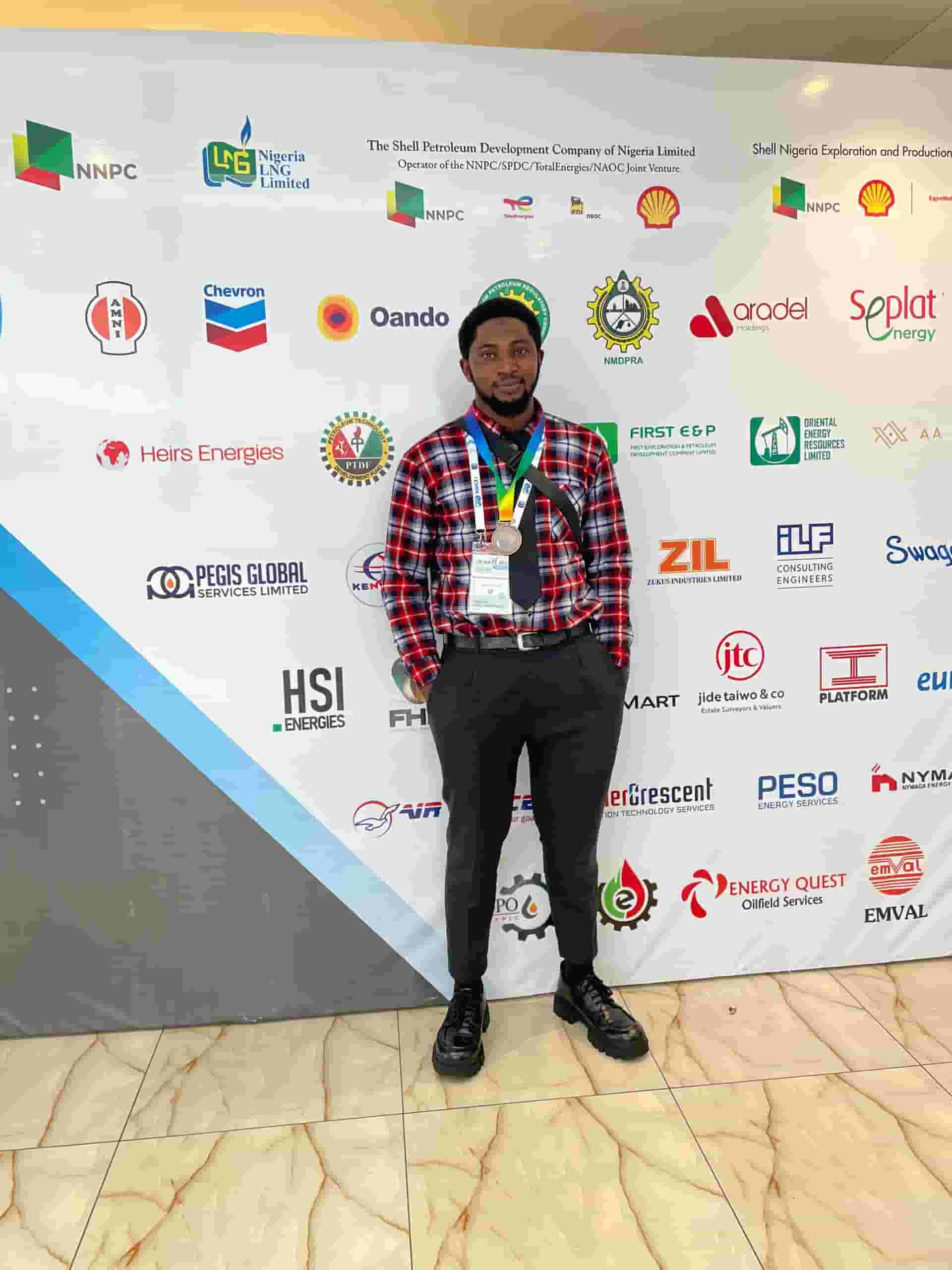
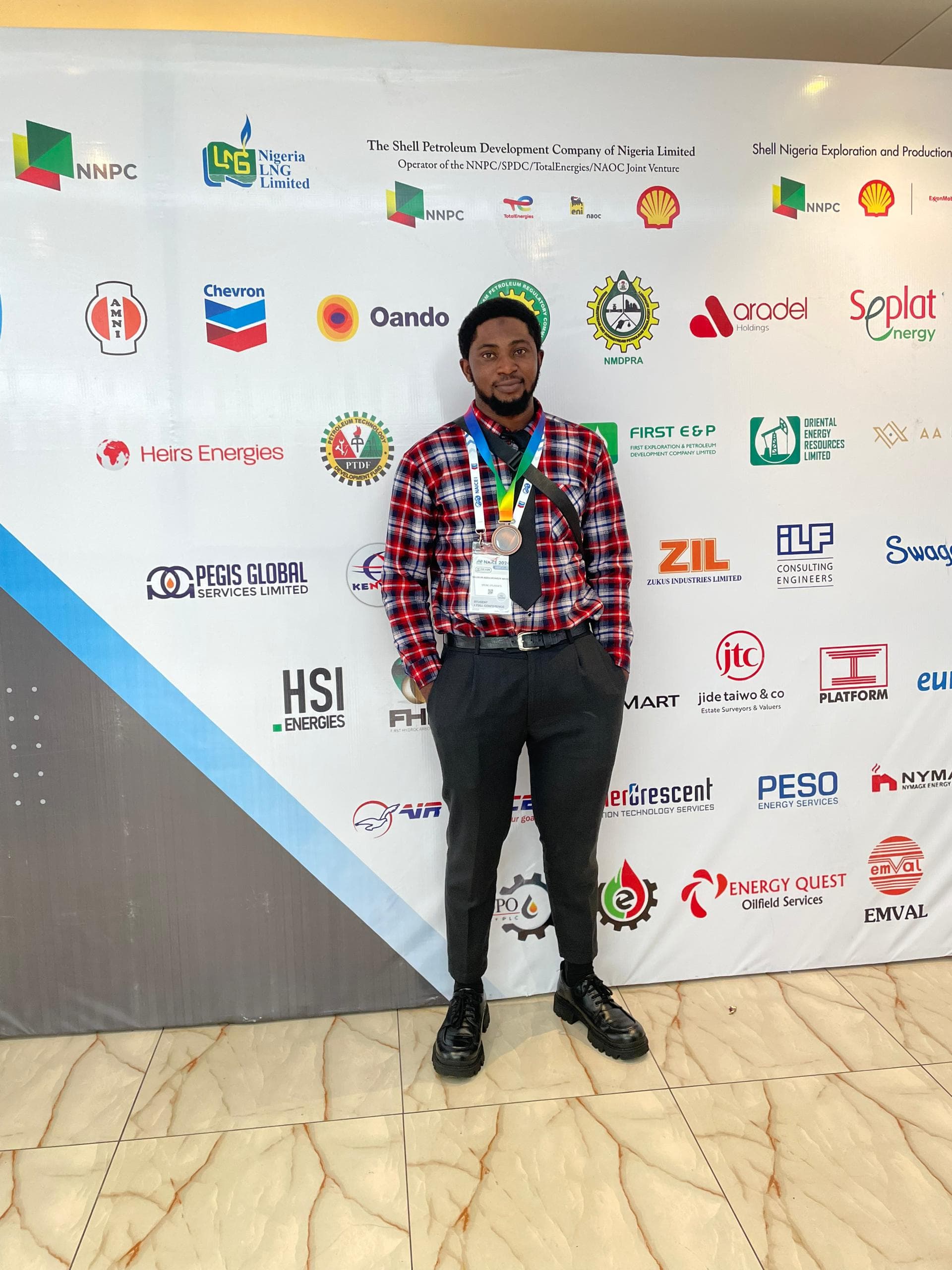
Certainly. I’ve had the opportunity to volunteer and contribute to various organizations, both within and outside the university community. One of them is the Society of Petroleum Engineers (SPE) Nigeria Council. I volunteered during their National Annual International Conference and Exhibition (NAICE) held at The Eko Hotel in Lagos. I assisted in the smooth running of the event, specifically in session operations and helping with short courses during the conference.
I also volunteer with the Mathematics for Life Foundation, where I help in setting mathematics questions for the Global Open Mathematics Tournament, an experience that allows me to contribute to the academic growth of younger students.
Within the University of Ibadan, I’ve been a volunteer tutor with the Muslim Techites’ Study Group (MTSG), where I taught Engineering Thermodynamics. I also volunteered as a tutor under the Circle of Prelim Muslim Students (CPMSS), where I taught Heat and Thermodynamics, Engineering Drawing, and Waves and Optics.
These experiences have helped me grow in leadership, communication, and service, and I’m grateful for the chance to give back in meaningful ways.
How were you able to combine extracurriculars and academics?
Combining extracurriculars with academics was definitely challenging, especially studying a demanding course like Petroleum Engineering. However, it all came down to proper planning, discipline, and effective time management. I was involved in several organizations and volunteering roles, but I always made sure my academics remained a top priority.
One thing that helped was being intentional with my schedule; I tried as much as possible to allocate time for everything important and stay consistent. Also, I ensured that whatever extracurricular activity I was involved in added value to my personal or professional growth, so I saw it as an investment, not a distraction.
Above all, I sincerely believe that Allāh’s guidance played a major role in helping me manage it all. Without His help, it wouldn't have been possible.
What was your reading schedule as an undergraduate like?
My reading schedule varied depending on the period in the semester. At the beginning, I usually focused on attending classes, understanding the concepts being taught, and doing light revisions regularly. But as the semester progressed, especially towards tests and exams, I became more deliberate with my schedule.
I often read at night when it was quieter and distractions were fewer. During the day, I tried to revise in between lectures or use any free time wisely. I didn’t have a rigid timetable throughout, but I made sure I covered all topics ahead of exams.
Most importantly, I learned to understand how best I assimilate and structured my reading around that. It wasn't easy, especially with extracurricular commitments, but by Allāh’s grace and with discipline, I was able to manage it effectively.
What were your most memorable moments as an undergraduate?
Some of my most memorable moments as an undergraduate include getting a 4.0 GPA in 100 level first semester, 300 level first semester, and 500 level first semester. Another highlight was winning both the 21st and 22nd editions of the SPENC Petroquiz competition, where Petroleum Engineering students from across the country competed. I was also honored to be one of the recipients of the Dr. Olumide Phillip Scholarship, awarded to just five top-performing Petroleum Engineering students in the scholarship exam nationwide. One of the most exciting moments for me was winning the Huawei ICT Competition Southern Africa Regional Final, a highly competitive event that involved over 20,000 students from more than 20 countries across Sub-Saharan Africa.
Did you encounter any challenges while in school? If yes, how did you overcome them?
A major challenge I faced occurred in my second semester of 300L when I experienced recurring health issues that significantly impacted my performance. Despite having a 4.0 GPA in my first semester of 300 level, which boosted my CGPA, my health problems led to a sharp decline in the second semester. I had a 3.35 GPA, causing my CGPA to drop. I wasn’t entirely sure why I kept falling ill, as I had never experienced anything like this before.
At 400 level, I decided to approach things differently. Instead of letting the illness completely derail my studies like I did in 300 level, I focused on adapting to the situation. I knew that I had to keep pushing, so I studied vigorously throughout the semester, even though I fell ill twice, including during the exam period. This time, I didn’t let the illness stop me from putting in the effort I needed to succeed. I made sure I studied consistently and, despite the challenges, managed to achieve a GPA of 3.81 in 400 level. While it wasn’t as high as my earlier performances, it was a significant improvement over my 300L second semester, and I was grateful for the progress I had made.
At 500 level, by Allāh’s grace, I was fortunate not to experience health issues, and I was able to fully focus on my studies. I achieved a GPA of 4.0 in the first semester, which was incredibly rewarding. This experience taught me the importance of resilience, adaptability, and staying focused even when faced with setbacks.
Eventually, I graduated with a CGPA of 3.86, which I am very proud of, considering the challenges I had to overcome throughout my academic journey.
What are your plans after graduation? Do you have any plans for further education or entering the workforce?
All of the above! I plan to gain some industry experience and apply the knowledge I’ve acquired so far while also pursuing further studies to deepen my expertise, especially in areas like data science and machine learning as they relate to energy and production optimization.
I’m passionate about using technology to drive innovation in the energy sector, so my journey definitely continues from here, just on a bigger stage.
What advice would you give students who also want to finish excellently?
My first advice would be to strengthen your connection with Allāh. No success can be attained without His leave, and I can confidently say His guidance was fundamental to my journey.
Secondly, practice effective time management. Have clear goals, set your priorities right, make plans and stick to them. Let your goals go beyond academics. Invest in developing yourself holistically.
Lastly, learn to say “no.” There will be many distractions along the way. Don’t be afraid to say no to people or things that don’t align with your goals. Don’t sacrifice your long-term growth just to please others, you’ll thank yourself later.