
Reading time:3 min read
Examination Malpractice: A Serious Academic Crime
CSVC
July 14, 2025Introduction
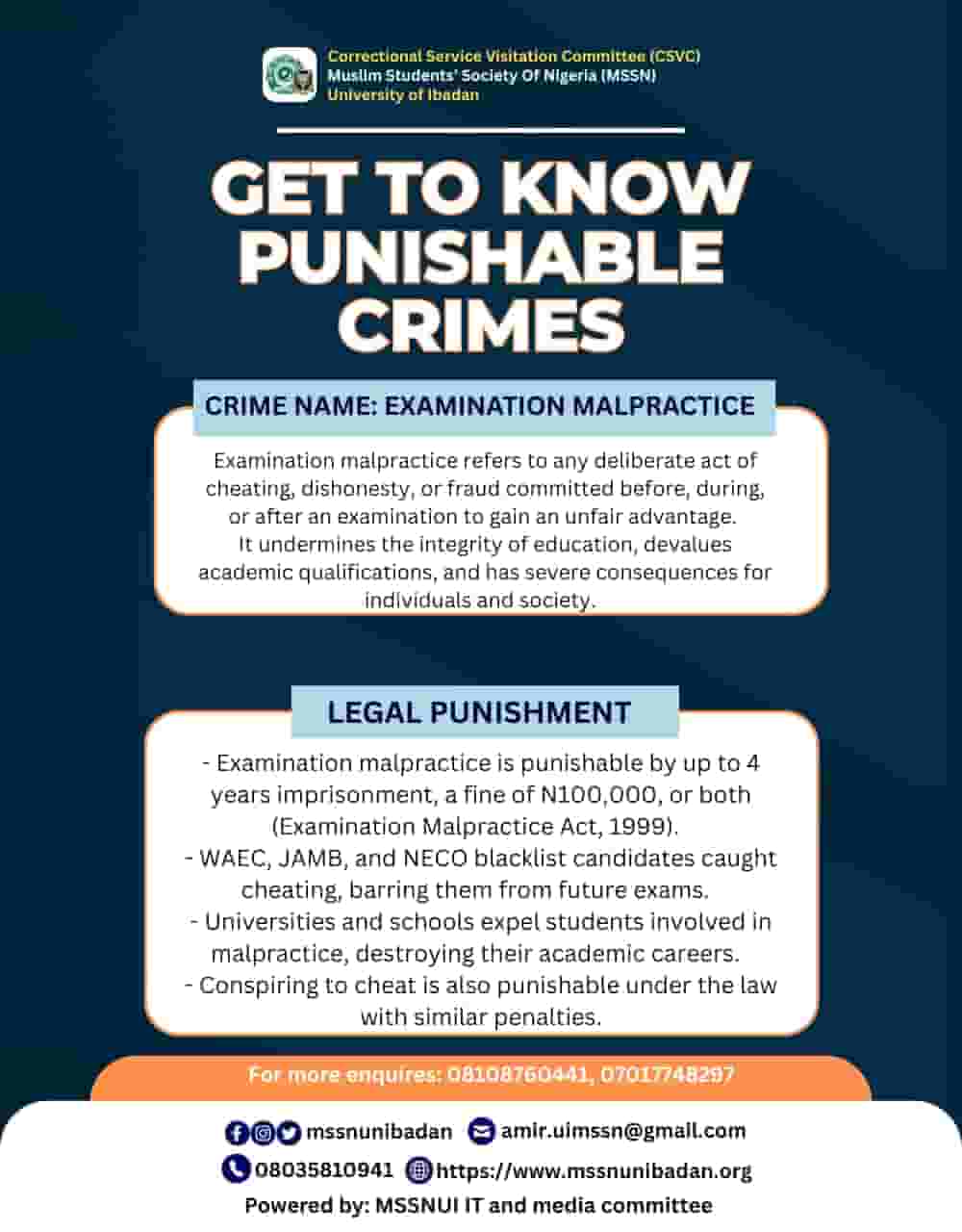
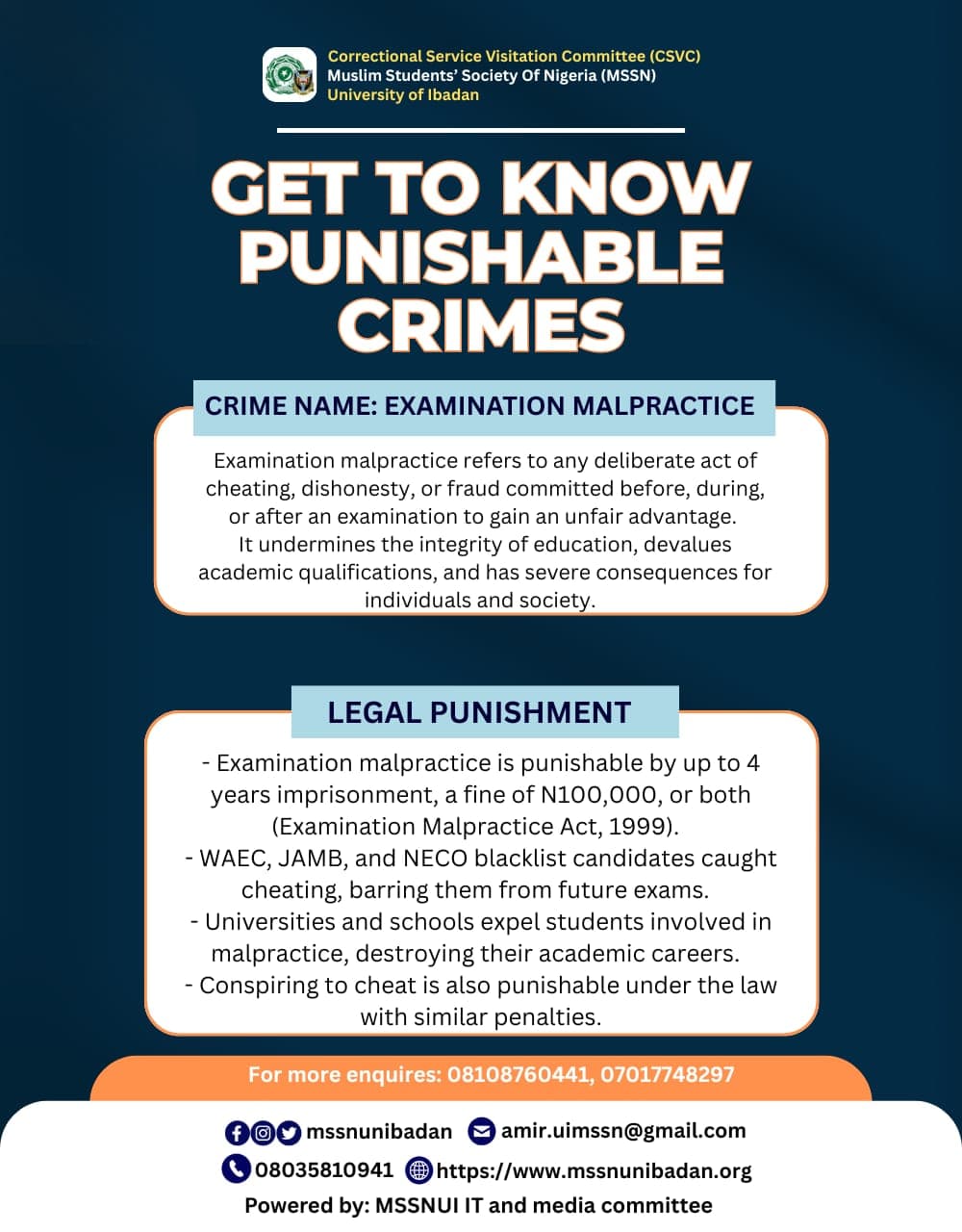
Examination malpractice refers to any deliberate act of cheating, dishonesty, or fraud committed before, during, or after an examination to gain an unfair advantage. It undermines the integrity of education, devalues academic qualifications, and has severe consequences for individuals and society.
Examples
1. Leaking of Exam Questions
- Buying, selling, or sharing exam questions before the scheduled date.
- Unauthorized access to exam materials by teachers or officials.
2. Impersonation
- Hiring someone else to write an exam in your place.
- Using fake identification to take a test for another person.
3. Copying or Collusion
- Sneaking notes, textbooks, or phones into the exam hall.
- Whispering answers, exchanging scripts, or working with others during the test.
4. Fraudulent Grading
- Teachers altering scores for money or favour.
- Forging certificates or result sheets.
5. Plagiarism
- Submitting someone else’s work (e.g., essays, projects) as your own.
Legal Consequences
In Nigeria, examination malpractice is a criminal offence under Nigerian law. Key penalties include:
- The Examination Malpractice Act (1999) prescribes up to 4 years imprisonment and/or fines for offenders. “Any person who conspires to cheat in an examination shall be liable on conviction to a fine of N100,000 or imprisonment for a term not exceeding four years or both." (Examination Malpractice Act, 1999, Section 3)
- WAEC, JAMB, and NECO blacklist candidates caught cheating, banning them from future exams.
- Universities and schools expel students involved, ruining academic careers.
Conclusion
Examination malpractice is not just cheating, it is a crime with long-term consequences. It destroys credibility, limits future opportunities, and damages Nigeria’s education system. Students, teachers, and parents must uphold honesty and hard work as the true path to success. Remember, shortcuts in exams lead to lifelong regrets. Integrity lasts forever.
References
- Examination Malpractice Act (1999)
- WAEC/NECO/JAMB Examination Regulations
- Nigerian Criminal Code (Section 465)
This is a publication of the Correctional Service Visitation Committee (CSVC) of the Muslim Students' Society of Nigeria, University of Ibadan (MSSNUI).