


Reading time:5 min read
Editorial: The Silent Crisis Behind Our Screens
Adh-Dhikr Press Editorial Board
November 24, 2025People often say social media helps to ease stress and serves as an escape from reality. But what exactly is so difficult about reality that we feel the need to escape it? Could it be that what we are truly escaping from are responsibility, intelligence, creativity, and progress? You might argue that you find creative, expository, mind-opening and exploratory content online. That is fair. But a real question remains: how much of what you watch do you actually bring back into your life and convert into meaningful impact?
This is not to suggest that social media is a scam. Rather, its design has evolved in a way that makes us lose the benefits it once offered. Social media and digital devices are remarkable innovations. When used rightly, they allow humans to perform tasks once impossible. But looking back and also looking forward, have they only improved our lives, or have they also been quietly depreciating our values?
Do you wonder why you exhaust your stipend and half your wage on data subscription? Or why you struggle to focus on the writing you need to complete because your thoughts will not stay together? Why does your phone’s absence make you restless and uneasy? Can you go through a day without switching on your data? Do you sometimes feel your phone understands you more than the people around you? Does it affect your ability to complete your tasks, including the daily prayers that should steady your mind? Have you ever found yourself in the fourth rakah of Maghrib without knowing how you got there, or regained awareness only at the tasleem? While many things may cause such lapses, these distractions are often a result of being trapped in the device’s cycle.
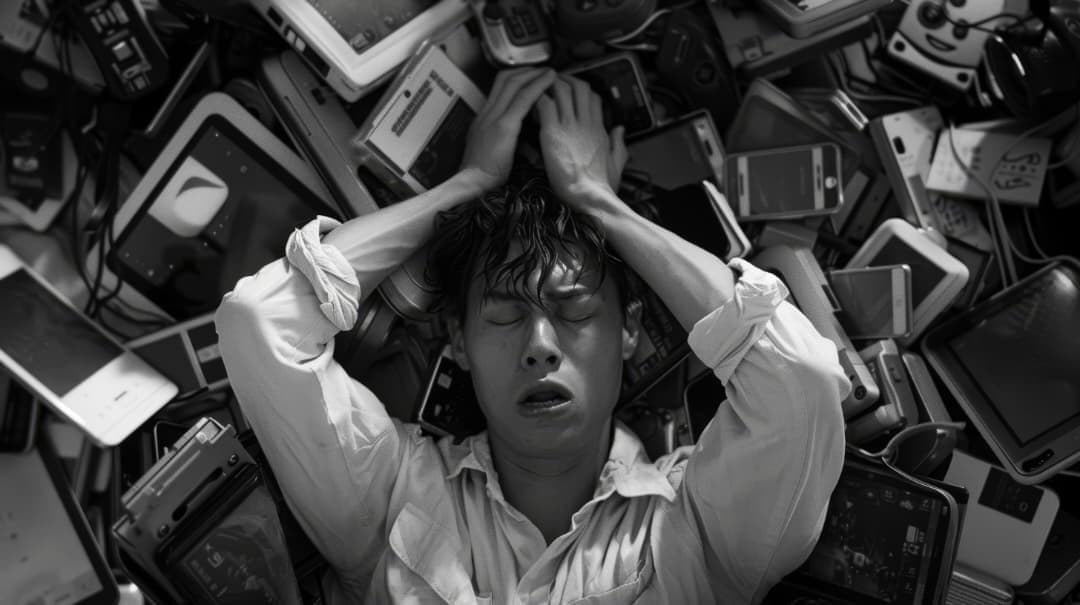
Congratulations to the generation of digital immigrants, because they may never fully understand the weight of trials placed on digital natives who are striving for success. Financial stability, capacity building, academic excellence, relationships, authenticity, mental wellness and self-worth are all at risk for any youth who grew up holding a sixteen-inch device and its likes. The world on screens is irresistibly appealing. Everyone has experienced how gadgets can drain the motivation needed for real-life work. People lose interest in activities, struggle with skills they once had, and watch their intellectual abilities fade. This is not coincidence. It is design.
Older generations, especially millennials, can testify to this shift. The internet they used two decades ago was not as addictive or immersive as what we have today. Being online often meant sitting in front of a bulky desktop computer with limited avenues for stimulation. Although you could chat, watch videos, search for jobs or read reports, it was uncommon to sit there for six straight hours unless you were chatting with a lover. Distractions existed, but addiction was far less likely than it is with the highly engineered systems available today.
Modern distraction and addiction are driven by dopamine and strengthened by algorithms. Social media apps are crafted to keep you feeding your craving for dopamine, the hormone responsible for pleasure and reward. To keep you engaged, these platforms offer features like shorts, reels, stories, statuses and more.
The algorithm quietly studies your interests and fills your screen with similar content: videos, news, profiles, adverts. You consume so much information and entertainment, most of it unnecessary, and you retain very little. Meanwhile, your real-life tasks remain undone because time slips away unnoticed. You feel stressed by the backlog and the pressure, and then continue scrolling to soothe the stress. The cycle continues. Along the way, your sense of personal value weakens as you absorb content without filtering it. This leads to identity confusion.
Through doom-scrolling, brain-rot content, fake displays of success, likes hunting, bandwagon behaviour and other online trends, it becomes easy to lose yourself on the very devices that connect you to the world. The need to individuate, to find your true self in a demanding world, is essential for growth. But today, many end up losing themselves because of what they encounter online. You seek rest, connection, exploration, entertainment or self-improvement, and your device becomes your companion. But without caution, you can end up with worse problems than the ones you were trying to escape.