
Reading time:7 min read
A Journey Through Sixty-Six Years
Abdulhamid Balogun
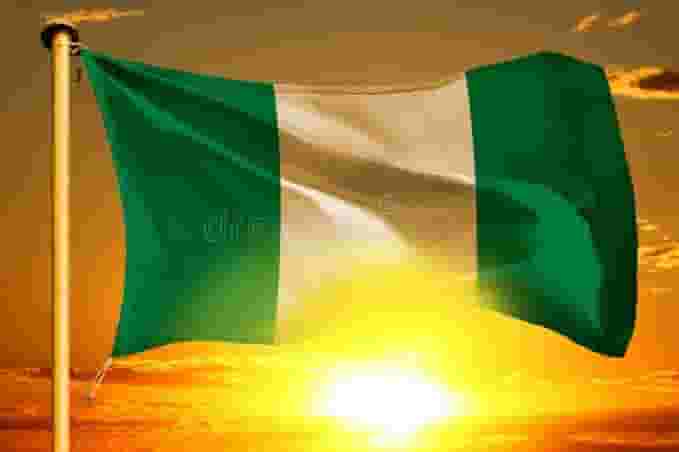
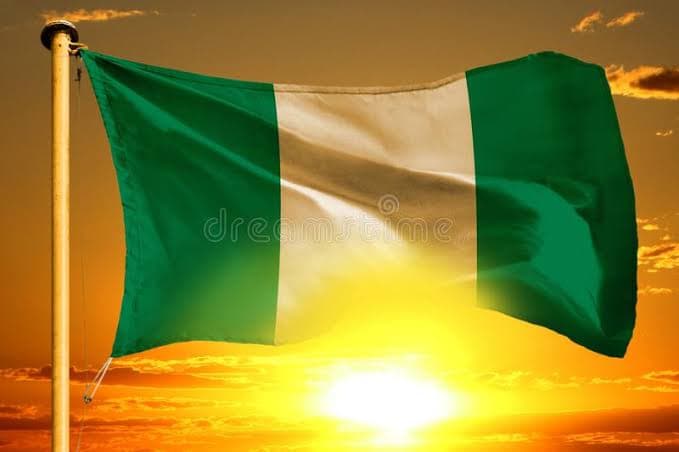
October 02, 2026The clock struck, and quietly the lights flooded back on to show the green-white-green flag flying high, marking not only the end of the British Union Jack, but also the official freedom of Nigeria from the colonial era. The nationalists had succeeded in bringing to us the freedom we all lusted after, and finally we had a new dawn.
It was October 1, 1960. The country rejoiced at the sound of freedom. Mouths watered at the sweet taste of being free, but little was it known that freedom came at a price. Freedom is not free! Freedom comes bearing responsibilities, and when these responsibilities fall short of execution, freedom turns against us.
Prime Minister Sir Abubakar Tafawa Balewa took on the mantle of leading the whole country in a parliamentary system, with Sir James Robertson, the last colonial governor-general, staying on until Dr. Nnamdi Azikiwe succeeded him in November 1960. This was before October 1, 1963 when Nigeria cut the remaining nominal ties with the British, eventually becoming a republic. Azikiwe then became the first ceremonial president.
And then Tafawa Balewa and some others were killed, plaguing the young government in the very first coup d’etat on January 15, 1966, amid the growing regional and ethnic tensions. Major General Johnson Aguiyi-Ironsi officially assumed power on January 16, 1966, becoming the first military head of state. However, he did not last for a long time before he was overthrown in July 1966 in a counter-coup, eventually leading to the emergence of Lieutenant Colonel Yakubu Gowon as Head of State.
The civil war, which spanned from 1967 to January 1970, recording about two million deaths, perhaps marked the first test of the price of freedom. Rising ethnic tensions and anti-Igbo massacres in the Northern region had led the Eastern region, governed by Lieutenant Colonel Chukwuemeka Odumegwu Ojukwu, to declare itself “Republic of Biafra.” The war eventually ended with the surrender of Biafra in January 1970.
Then came the oil boom. While oil was originally discovered in Oloibiri in 1956, the true surge was actually 1973. The oil boom greatly increased Nigeria’s revenues, and radically transformed Nigeria from a self-sufficient agrarian nation into a petroleum-reliant mono-economy, and the consequences are still very visible in its present-day economy.
Major General Yakubu Gowon ruled until 1975, having created twelve states in 1967, before being overthrown by General Murtala Mohammed. Murtala, while in power created seven additional states, bringing the total to nineteen, before being assassinated about seven months after taking power.
After his assassination, Lieutenant General Olusegun Obasanjo took over power. Obasanjo's military government oversaw the drafting and adoption of the 1979 constitution, as well as the continued transition towards civilian rule. The government introduced the presidential system of government before finally handing over power to Shehu Shagari following the 1979 elections, marking the beginning of Nigeria’s Second Republic.
However, Shagari’s administration did not last long, before a military coup, led by Major General Muhammadu Buhari overthrew it in late 1983, amid growing economic decline and corruption. Buhari’s regime introduced “War Against Indiscipline.” General Ibrahim Babangida seized power in 1985, and promised a return to democracy.
June 12, 1993, a date which would go on as one of the most important dates in the history of Nigeria, saw what was widely regarded as the freest and fairest election held in the country. The election was generally believed to have been won by Chief Moshood Abiola. However, Babangida annulled the results, eventually leading to massive civil unrest. Amid this, Babangida stepped aside and handed over governance to an interim government led by Chief Ernest Shonekan.
On November 17, 1993, General Sani Abacha took over power, ending the interim government. Abacha died in office in 1998 after a regime full of political repression, military rule and human rights controversies.
Following that, Abdulsalami Abubakar became head of state. His regime saw a swift move towards civilian rule. A new 1999 constitution was promulgated, elections were held and on May 29, 1999, Olusegun Obasanjo was sworn in as the president of the Federal Republic of Nigeria. This marked the beginning of the Fourth Republic, which continues to the present day.
Obasanjo ruled for eight years before leaving power in 2007 following a presidential election won by Umaru Musa Yar’Adua. Yar’Adua ruled for about three years before his death in 2010, after which his then Vice-President, Goodluck Ebele Jonathan, succeeded him. Jonathan then went on to serve for another four years after winning the 2011 presidential election.
Muhammadu Buhari assumed the presidential office following his victory over Jonathan in the 2015 presidential elections. Bola Ahmed Tinubu, the current president of the Federal Republic of Nigeria assumed office in 2023, taking over from Buhari who had ruled for eight years.
The history of Nigeria has been nothing short of adventurous, with marked ups and downs. Perhaps that is the price that comes with freedom itself. Freedom guarantees independence, but it comes with a price, and only those willing to pay such a price can truly enjoy the fruits of Independence. This is a price Nigeria is still paying and still learning how to turn hard-won freedom into lasting progress for its people.
As Nigeria celebrates its sixty-sixth independence anniversary, we are reminded that true independence begins within ourselves. A journey of sixty-six years began with a single step into freedom and has since seen countless steps taken. Perhaps those steps have to be retraced.
In a country like Nigeria, a nation revered by many, as the “Giant of Africa,” it is imperative that we look back at where we started, review our present state, and know where we are headed. Giants are not measured by size alone but by the strength of their institutions, the well-being of their people and their ability to learn from their own history.
And as another presidential election gradually draws upon us, it is imperative for us to be reminded of our journey so far. How far we have come and how much further we remain from achieving the land of our dreams. It is important that we retrace our steps, get back on the right track, fight for true freedom, while being ready to pay the price in full.
Perhaps with this, we may finally hand on to our children a banner without stain, and Nigeria may, with peace and plenty, be blessed.